Discover the latest insights from Ducker Carlisle’s thermal management market research, revealing the dominant use of R1234yf refrigerant by carmakers in PHEVs and BEVs. With a focus on enhancing battery range and lifespan, the shift towards effective thermal management is imperative.
The Rapid Rise of Chinese Electric Vehicles in Europe: Challenges and Implications
Analysis of the European Commission’s Anti-Subsidy Investigation and its Impact on the Global Electric Vehicle Market
In recent years, China has become a major player in the global electric vehicle (EV) market. With an astounding increase of domestic production of EVs, the Chinese Original Equipment Manufacturers (OEMs) are looking forward to exporting their vehicles and are targeting Europe among other global markets like Mexico. This trend is leading to growing concerns from both the European carmakers and the governments alike since the Chinese EV market shares are growing, with serious competitiveness in the price of their vehicles.
In less than two years, China’s market share in the European electric car market has more than doubled. The first seven months of 2023 saw Chinese automakers sell almost as many electric cars in Europe as they did throughout 2022. The EV market is accelerating at an unprecedented rate for all OEMs, and the Chinese OEMs in particular.
China’s share of the European car market has surged from 0.1% in 2019 to 2.8% in the first seven months of 2023. Specifically, the market for pure battery electric cars has risen from 0.5% in 2019 to 3.9% in 2021. In 2023, Chinese manufacturers claimed 8.2% of the European electric car market, selling 86,000 battery electric cars.
China brings serious competitors to the market, including BYD, SAIC, and Geely, among others. BYD, backed by American investor Warren Buffett, stands as one of the largest electric car makers globally, and expected to rank number one this year ahead of Tesla in total vehicle sales. These giants are joined by several electric-only startups, such as Nio and Xpeng, competing for a share of the growing global EV market.
Earlier this year in September, the European Commission launched an anti-subsidy investigation into Chinese EVs. This investigation was launched in response to concerns that Chinese EV makers are receiving unfair subsidies from the Chinese government, which in turn allows them to sell their vehicles at artificially low prices in the EU.
The investigation is still ongoing, and the Commission is expected to make a decision by early 2024. If the Commission finds that Chinese EVs are subject to dumping in the EU market, it could impose tariffs on these vehicles, which would make them more expensive and give European EV makers an advantage, or at least help them recover competitiveness. Ultimately, this could help boost the European EV industry and create jobs in the sector.
However, imposing tariffs on Chinese EVs could also lead to higher prices for consumers and businesses. This could slow down demand for EVs and the transition to clean energy transportation accordingly.
The Risk of the Chinese Government’s Retaliation and the Impact for European OEMs in China
The Chinese government has responded vehemently to the European Union’s anti-subsidy investigation on Chinese EVs, accusing the EU of engaging in protectionist measures. Furthermore, China has issued threats of retaliation if the EU goes ahead with imposing tariffs on Chinese EVs. These threats present a series of options for the Chinese government, including the possibility of:
· Imposing Tariffs on European Goods: One retaliatory measure at China’s disposal is to place tariffs on European products, affecting a wide range of industries.
· Restricting Market Access for European Companies: China could tighten regulations or add restrictions that hinder European businesses’ access to the Chinese market, making it harder for them to operate and expand.
· Initiating Anti-Dumping/Subsidy Investigations into European Products: Anti-dumping investigations could be launched against European goods, potentially leading to additional tariffs and trade barriers.
The ramifications of a potential Chinese retaliation could be harmful to European automakers operating in China. The European Union is a crucial export market for Chinese automakers, while China represents the largest sales market for several European automakers.
European automakers have a notable presence in the Chinese light vehicle market, accounting for about 20% of the market share. Leading the European contingent are German OEMs such as Volkswagen (10%), BMW (3%), and Mercedes (3%), with a combined market share of 16%. Groups representing French brands, Renault-Nissan-Mitsubishi Alliance and Stellantis, hold respectively 3.5% and 4% of the market share. As a result, German automakers are more vulnerable to potential Chinese retaliation.
Conversely, Germany’s automotive industry has expressed concerns about potential risks stemming from the investigation. VDA (The German Association of the Automotive Industry) highlights the importance of free, fair, and rule-based trade for both exports and imports from third countries. They stress the need to consider the quantifiable damage and community interests while acknowledging the potential backlash from China.
French authorities support the investigation, with French Europe Minister Laurence Boone emphasizing the need to protect their market from imported EVs that could threaten European companies. Similarly, French Finance Minister Bruno Le Maire has welcomed the probe to ensure fair international trade rules, safeguard Europe’s competitiveness, and protect its economic interests.
While this situation may seem like a contest against Beijing, collateral damages can impact not only the situation of German OEMs, but also other European industries with trade relations and a footprint in China. The possibility of a “boomerang effect” could affect Germany at a larger scale given its substantial investments and exposure to the Chinese market.
It is evident that this anti-subsidy investigation alone may not be sufficient to address the broader challenges related to the competitiveness of the European automotive landscape. Policymakers in Brussels and Berlin must work to create favorable framework conditions that support the transformation of the industry.
The Complexity of China’s Electric Vehicle Industry
China’s EV industry is a multifaceted phenomenon, distinct from other export sectors like solar panels, and its ascent is driven by a combination of factors, not solely reliant on subsidies. As early as 2001, the Chinese government engaged policies promoting battery systems, with a particular focus on the automotive industry. China doesn’t produce crude oil, and its relative lack of history in internal combustion engines were promoting the investigation into alternative energies and technologies. From 2008 onwards, EV promotion assumed a central role in China’s economic policies giving the country an edge with a fully integrated vertical for battery production and specific expertise in chemistries.
Estimates reveal substantial state support, with subsidies and tax incentives amounting to over 200 billion RMB (approximately $29 billion) allocated to the EV industry between 2009 and 2022. Beyond these financial incentives, public procurement practices favor the adoption of EVs for local public transportation, complemented by incentives extended to consumers. These incentives, for instance, encompass EV license plate fee waivers, a coveted benefit, particularly in densely populated Chinese cities, and other purchase subsidies.
One can only recognize the pivotal role played by China’s innovative private sector and its entrepreneurial dynamism in propelling the EV industry forward. In 2022, China became the world’s largest EV market, representing 60% share of global EV sales. This rapid growth is further underscored by China’s contribution of approximately 35% to the total global electric car exports last year.
This has benefitted both Chinese and foreign OEMs with vehicle production in China. For instance, Tesla is estimated to have accounted for 49% of electric vehicle exports from China between January 2021 and March 2022. These developments occurred in contrast to earlier years when European, particularly German, automakers focused on selling internal combustion engine (ICE) cars to China. The technology shift rebalanced the technology advantage that foreign OEMs had over their Chinese competitors. Competitiveness appears to be less about technology, rather, more about pricing and vehicle content.
Consequently, the dynamics have shifted. Volkswagen trails Chinese OEMs with a modest 3.7% share of electric car sales in China, including hybrids. This comes as European OEMs are now facing the same growing number of made-in-China EVs in global markets.
MSRP comparison, EU vs. CN, in Euro
The European Union perceives Chinese EVs as being affordable while the gap with European models is even more pronounced in China. An illustrative example is the entry-level Volkswagen ID.3 with a 57.3 kWh battery. The entry price in Europe is €40,000 Euros, inclusive of value-added tax (VAT). In China, the same vehicle is priced around €20,000, benefiting from VAT exemptions for battery electric vehicles. As an additional reflection of these challenges, VW initiated a marketing campaign, effectively enabling customers to get an ID.3 for as little as €17,000, less than half the price of the same model in the EU.

The most obvious reasons why EV prices are lower in China are a result of:
· Government incentives in China
· Local competition by OEMs driving down the prices
· Lower production costs
· 10% VAT exempted in China
Effectiveness of Tariffs and Alternative Solutions
Europe should be careful as imposing tariffs to remedy the challenge posed by subsidized Chinese EVs may have serious side effects. Anti-dumping duties may appear as a logical response to the situation if confirmed, experience shows limited results.
Tariffs may temporarily ensure a level pricing field for European OEMs, it comes as an increased cost for European consumer while additional taxes on emissions and weight are applied to ICE vehicles. This may ultimately keep some European buyers permanently away from the new car market.
Crucially, the tariff approach raises questions concerning EVs produced in China by Western OEMs then imported to Europe. Inevitably, these vehicles would also fall under the umbrella of tariffs, with negative repercussions on European companies. A prime example includes Tesla’s Model 3 and the Renault Spring.
Moreover, one can assume that China would not let EU anti-dumping duties unanswered. In the context of trade defense mechanisms, this tit-for-tat scenario compels Europe to contemplate its own stance in the realm of clean energy vehicles. This would ultimately hurt French and German OEMs with production in China creating a risk for all European investments in and exposure to China.
History may only repeat itself. Approximately a decade ago, Brussels initiated anti-dumping and anti-subsidy measures targeting the import of Chinese solar panels and telecommunications equipment. China’s managed to put EU members against each other forcing the Commission to abandon its campaign against Beijing in 2013.
Tariffs present limitations, but other alternative and more effective policy measure exist. A paramount approach would involve creating an environment in the EU that is conducive to production and research and development (R&D). The problem is most European countries precipitated into incentivizing consumers to promote EVs without ensuring the industry had the capacity and the capability to supply the market. A late reaction is more difficult to manage now consumers are cornered with EV adoption. Another avenue of opportunity lies in the potential for increased investment by Chinese OEMs and suppliers within Europe, dedicated to local EV production. Notably, leading battery companies, including CATL, EVE, and Sunwoda, have already established new facilities in Europe. Recent speculation also indicates that companies like BYD and SAIC may set up production facilities within Europe to cater to the EU market. An illustrative example of this cooperative spirit is seen in a recent meeting between France’s President Emmanuel Macron and a Chinese lobby group. During this interaction, President Macron expressed France’s willingness to subsidize EVs that are locally manufactured, prioritizing homegrown production over overseas manufacturers supported by French taxpayers’ funds.
The evolving landscape of international trade and competition in the electric vehicle industry underscores the complexity of the situation and the need for nuanced policy responses.
Ducker Carlisle’s decades of automotive consulting experience and comprehensive expertise in auto and light truck manufacturing, electrification, aftersales, and parts benchmarking help automotive clients secure an advantage in a shifting global market. Learn more here.
Article Prepared By:
Leonard Ling, Senior Analyst – Automotive Knowledge Manager
Bertrand Rakoto, Director – Global Automotive Practice Leader
Abey Abraham, Principal
The Electric Vehicle Charging Connector Conundrum: A Quest for Standardization in North America
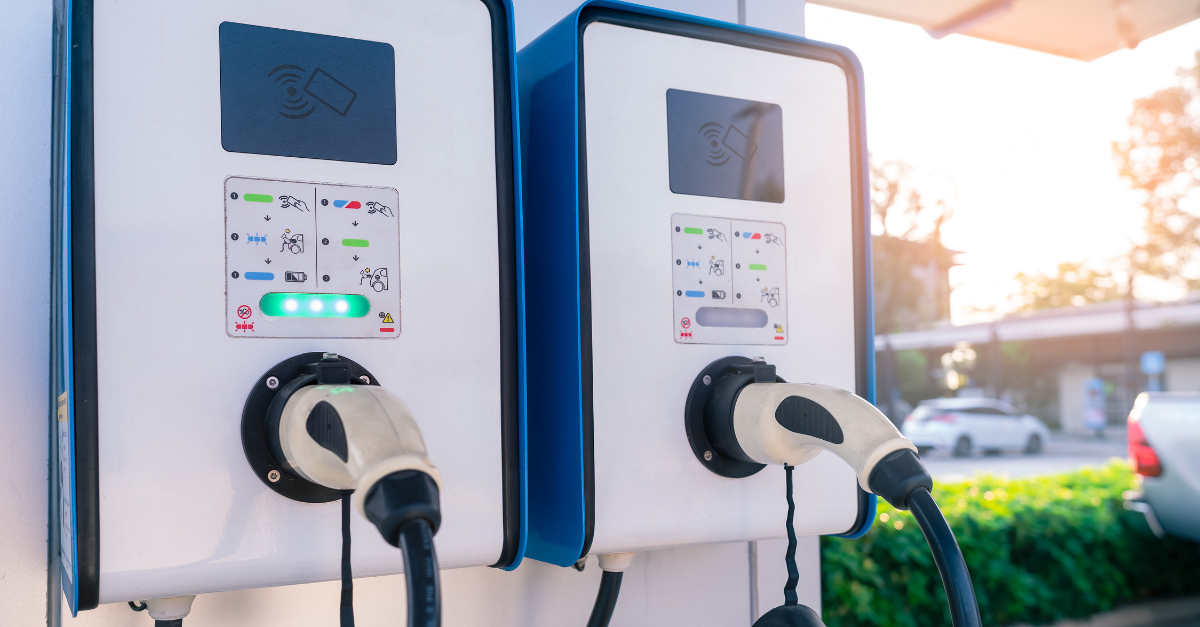
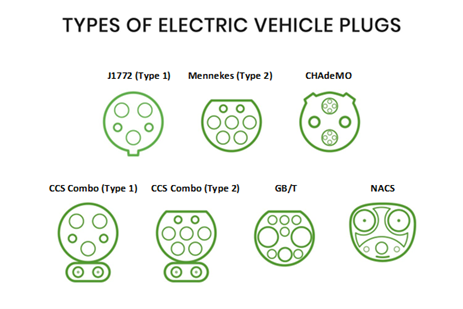
The electric vehicle (EV) industry is characterized by an abundance of charging connector standards including J1772, CCS1, CCS2, CHAdeMO, Mennekes, GB/T, and NACS. However, recent agreements between Tesla, Fisker, Ford, GM, Hyundai, Lucid, Mercedes-Benz, Nissan, Polestar, Rivian, Volvo, and SAE have reignited the debate on adopting a single standard. These brands will rely on the Tesla-developed NACS for both AC and DC charging in North America.
It’s worth noting that the current charging landscape in the USA EV public charging network consists of approximately 53,000 stations and 140,000 connectors. Additionally, the satisfaction from users is dropping according to JD Power. ChargePoint has around 18,000 stations in the USA, followed by Electrify America with roughly 5,000 stations, Blink with around 4,000 stations, and EVgo with 850 stations. Tesla operates about 1,800 stations with 17,000 connectors. Additionally, there are approximately 9,000 stations shared among hotels and franchises like Starbucks, Dunkin’, and McDonald’s. These stations often support multiple standards such as J1772, CCS1, even sometimes CHAdeMO. It requires users to have adapters and subscriptions to different networks for recharging. This adds to the challenge in terms of finding available and working charging spots while the number of stations increases at a slower pace than the number of BEVs sold each year.
(Source: Ducker Carlisle, svetolk/iStock/Getty Images Plus)
Tesla’s Game-Changing Influence on American Standards
The Biden administration has committed to investing $7.5 billion in charging infrastructure by 2030, aiming to deploy 500,000 connectors across the American road network. It’s crucial to recognize that charging time is one of the main barriers to the widespread adoption of Battery Electric Vehicles (BEVs). Consequently, it leads to range anxiety and creates a focus on charging and increased range (therefore, the weight and the cost of BEVs). Most automakers are joining Tesla and Volkswagen (through Electrify America) in the race to establish a denser charging network. In June this year, BMW, GM, Honda, Hyundai, Kia, Mercedes-Benz, and Stellantis have created a joint venture to launch a new public charging network in North America. This is essential as several independent networks face criticism regarding their speed, operational status, and compatibility.
Among existing charging networks, Tesla has managed to develop a more reliable solution, and the most satisfying to users, attracting the attention of GM and Ford in the first place. These two automakers were also first to announce their intention to adopt the NACS by 2025. It follows Tesla’s decision to open its network to its competitors. Fisker, Lucid, Mercedes-Benz, Nissan, Polestar, Rivian, Volvo also announced that they will adopt the NACS standard. But it doesn’t mean the market will abandon the widely used J1772 and CCS standards in the long term. First, the current plug-in EVs in operation are not all based on NACS. And second, to make NACS a long-term standard for North America would require the adherence of all OEMs.
Tesla’s Network and the Role of the US Government
In the electrification realm, strength lies in numbers and funding. Tesla requires the support of its competitors through opening its network to other brands to access a portion of the $7.5 billion investment from the US administration. In that battle for funding, the adoption of NACS as the main standard for most OEMs is a key victory for Tesla. It means Tesla’s network will be more easily opened to owners of other BEV brands. It is essential as taxpayer money must not be disproportionately allocated in favor of one brand over another.
As a result, Tesla opened its supercharger network to other brands. However, it’s limited to those with Magic Dock (as of now) and to V1 versions. Payments are processed through the Tesla app. This facilitates opening the Tesla network as its connectors don’t provide an interface for payment. In the meantime, it’s very unlikely that OEMs will provide Tesla with some access to their vehicles to trace and invoice customers accordingly. The limitation to certain Tesla superchargers also prevents from overcrowding as waiting times at strategic locations are long and the number of connectors can be insufficient.
A Global Standard for Connectors
The electrification of vehicles necessitates significant progress in addressing four main challenges simultaneously being technology, materials (quantity and cost), infrastructure, and energy. Technology remains the primary challenge. Innovative solutions are necessary to mitigate cost increases compared to ICE vehicles. Chemistries such as lithium iron phosphate (LFP) could alleviate some of these challenges, but they come with a significant drawback in terms of range. Toyota’s recent announcement of new battery generations capable of achieving ranges of 745 miles by the end of the decade, and later up to 900 miles, has generated anticipation in the industry (source: https://www.autonews.com/mobility-report/toyota-future-ev-plans-include-batteries-900-mile-range). However, the realization of such technologies at the prototype stage for potential industrialization remains at an early stage in engineering and we are years away from industrial production. Cost and availability issues will remain on both material and energy perspectives. Technology will ease the pain on materials while utility companies work on solving the energy issues. In the meantime, BEV adoption relies strongly on the infrastructure. One connector standard could definitely help grow networks and compatibility, but consumers are still waiting for the hockey stick growth that’s expected in terms of number of charging stations. While it’s possible that Tesla’s North American Charging Standard (NACS) could gain prominence in North America, there remain diverse charging standards worldwide. In Europe, the CCS standard is utilized for rapid DC charging, mirroring North America’s approach. The European CCS system combines the Type 2 connector with two DC quick charge pins, reminiscent of North America’s J1772 connector. Conversely, China relies exclusively on the GB/T plug for its charging ports. Due to the extensive deployment of charging stations that have been made so far, it’s uncertain whether a unified charging standard can be achieved across major EV markets in the near future.
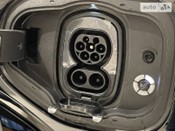
North America CCS Type 2 port on Mustang Mach-E (DC/AC merged)
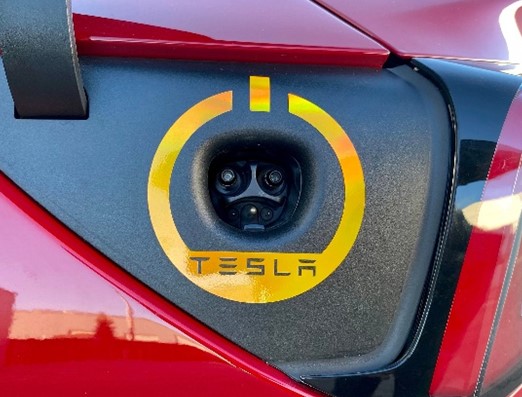
Tesla NACS port on Tesla Model 3 (DC/AC merged)
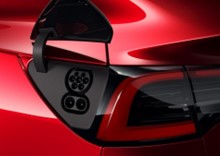
Europe CCS Type 2 port on Tesla Model 3 (DC/AC merged)
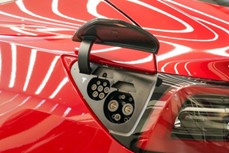
China GB/T charging ports on Tesla Model 3 (left: AC; right: DC)
Ducker Carlisle’s decades of automotive consulting experience and comprehensive expertise in auto and light truck manufacturing, electrification, aftersales, and parts benchmarking help automotive clients secure an advantage in a shifting global market. Learn more here.
Article Prepared By:
Leonard Ling, Senior Analyst – Automotive Knowledge Manager
Bertrand Rakoto, Director – Global Automotive Practice Leader
Building & Construction Updated Analysis and Outlook April 2023

US Construction Industry Analysis – Updated Analysis and Outlook 2023-2026
Ducker Carlisle Announces Addition of Senior Leadership Team Members : Christian Zamet & Tarun Chhibber

Ducker Carlisle, a global consulting, and M&A advisory firm has announced the addition of Christian Zamet and Tarun Chhibber to the senior leadership team.
Christian Zamet joins Ducker Carlisle as the President of European Operations. Zamet has extensive experience and expertise in consulting and a strong focus on automotive markets. In his prior role as a Managing Director at Accenture, Zamet led growth, pricing, and corporate strategy for the Gallia region.
Zamet will lead Ducker Carlisle’s European growth strategy including ongoing support of existing multi-national clients, expansion of consulting services, advancing industry expertise, launch of innovative benchmark programs and team development.
Tarun Chhibber joins Ducker Carlisle as Managing Director of the Bangalore, India office. Chhibber has over two decades of experience in research, analytics, and design – delivering value to global consulting and advisory firms. Prior to Ducker Carlisle, Chhibber served as Vice President of Evalueserve, building global teams with varied skillsets for clients from incubation to scale, following different operating models.
Chhibber will contribute to the expansion of the India team to establish a best-in-class “center of excellence” for project delivery that includes market research, customer insights, and M&A advisory. Chhibber will ensure that teams are providing seamless and high-quality support that is focused on Ducker Carlisle’s strategic initiatives.

These new senior team member additions demonstrate continued investment and pursuit of Ducker Carlisle’s long term growth strategy to become the global, preferred consultancy for our clients and offer the most satisfying careers for our employees. “We are thrilled to welcome Christian and Tarun to the Ducker Carlisle team. We look forward to seeing how their strong experience and leadership will contribute to our exciting growth story,” says Dino Mauricio, CEO of Ducker Carlisle.
Aluminum Extruders Council Shape Maker Podcast : Featuring Abey Abraham

The past decade has seen doubling in per-vehicle aluminum extrusion use in North American passenger vehicles. More recently, significant additional growth has emerged from aluminum extrusion’s role in battery electric vehicles (BEV) applications.
To better understand the likely future, the Aluminum Extruders Council (AEC) asked Ducker Carlisle to examine the implications of the BEV market on extrusion use through the end of the decade. Abey Abraham, Principal at Ducker Carlisle, and Lynn Brown, Marketing Strategy Consultant for AEC, talk about the BEV market and aluminum extrusions.
They explore some key drivers, enablers and constraints for BEV demand as well as potential disruptors. In addition to discussing the future volume and market share of BEVs and hybrid electric vehicles, they explore the role of extrusions specific to BEVs, including battery boxes and battery protection/rockers.
To listen, please visit: https://lnkd.in/gpx-fnwa
The Shapemakers from the Aluminum Extruders Council is a podcast series that provides valuable information about timely and relevant aluminum extrusion topics. Whether it’s details about the tariffs on imports of aluminum profiles from China, how building and energy codes may affect aluminum extrusion products, or the industry’s efforts to attract and train the next generation of aluminum extrusion designers, engineers and employees, The Shapemakers podcast promises to enlighten and inspire all who listen.
This show will appeal to all those interested in how market, economic and industry forces are shaping the aluminum extrusion world – whether you’re an AEC member, an aluminum industry professional or aluminum extrusion customer. This show has something for everyone interested in learning more about aluminum extrusions.
Ducker’s Automotive & Transportation team is at the forefront key trends impacting the industry. Ducker’s https://www.duckercarlisle.com/industries/automotive-transportation/unique expertise in running custom market research and consulting services helps clients address specific growth questions and business challenges. Visit here for the latest insights and implications for global business, or contact us to connect with a team member.