Energy Transition + Data Centers = Opportunity

Two reports compiled by Ducker Carlisle indicate abundant opportunities for electrical engineers, manufacturers, and distributors in the coming years. Here’s an exclusive interview.

Tech Insights by Karen Hanson


The global transition to renewable and clean energy, combined with rapid data center development, is creating a perfect storm of opportunity for power electronics manufacturers and distributors, according to two Ducker Carlisle reports. However, making strategic decisions requires knowing which energy industries are growing and which are slowing.

The 2025 Global Energy Transition Outlook pinpoints data centers and AI applications as key drivers of renewable and nuclear energy worldwide while identifying challenges. The second report Ducker Carlisle prepared for the National Association of Electrical Distributors highlights which areas distributors can target in planning future strategies.

EEPower spoke to Kevin Sarb, Ducker Carlisle Managing Director, about how industry leaders can identify the trends and prepare for possible challenges. Erika TenEyck, Director of Business Intelligence Programs and Insights at the National Association of Electrical Distributors (NAED), weighed in by email.

Both reports project significant growth and decreasing costs in renewable energy, with opportunities in data centers, industrial electrification, microgrids, and grid capacity electronics.

What does the future hold for the power industry?
What does the future hold for the power industry? Image used courtesy of Adobe Stock
 

Report Insights

The 2025 Global Energy Transition Outlook predicts that renewable energy will surpass fossil fuel sources by 2035, with solar photovoltaic and wind predominating and nuclear energy growing in importance. At the same time, electricity demand will increase significantly by 2050, with data centers as the primary driver. However, grid modernization efforts, energy storage development, and governmental policies could influence the projections. The electronics industry will continue to face issues with supply chains, financing, and grid delays.
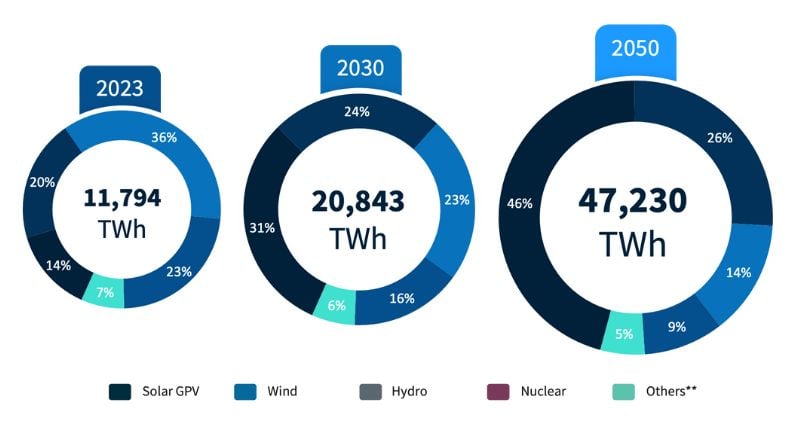
The global energy transition by 2050
The global energy transition by 2050. Image used courtesy of Ducker Carlisle
 

Ducker Carlisle prepared the second report, Electrification Drivers, Disruptors, & Scaling Your Business, for NAED to provide insights into trends in the electronics market. This study also predicts growing demand and examines market changes, such as the opportunities in small, medium, and large-scale projects. The report points out that electrification projects are growing in complexity, requiring distributors to be creative in meeting needs in the value chain. It also recommends that distributors target specific sectors and prioritize their expenditures.

Meeting Data Center Challenges With Clean Energy

Data center power demand will continue to drive the most opportunities and challenges through 2030, according to the Energy Transition report. In the U.S., data center electricity demand will increase by about 400 TWh. In China, data centers are projected to use about 380 billion kWh of electricity by 2030.

Data center developers are meeting the need through both utility-scale energy and microgrids. Data centers need energy quickly, and many are willing to create their own energy generation infrastructure.

“The demand is huge at the moment, and we expect it to continue,” Sarb said. “Eventually, they’ll all be connected to the grid, but utilities are slow at moving capital and getting investments up and running, certainly not at the pace of Google or Amazon might want to move, and they’re finding ways to say, ‘We need energy now’.”

At the same time, governments and companies have set clean energy goals. While these goals may not be on track to meet net-zero, they are making significant progress, with renewables or clean energy projected to generate about 80% of all electricity by 2050. These numbers represent the most likely scenario, but policies and conditions could change them, Serb cautioned.
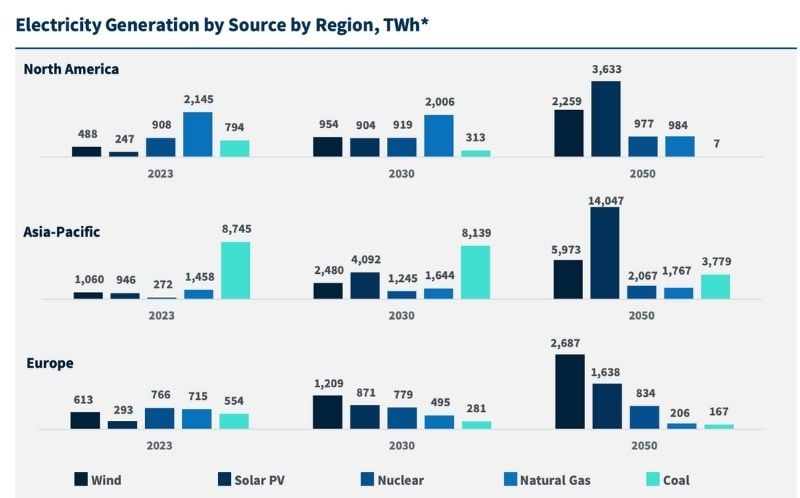
Renewable energy growth by 2050
Renewable energy growth by 2050. Image used courtesy of Ducker Carlisle
 

The Energy Transition report included nuclear as a clean energy source since it is emissions-free and noted that “a new generation of large-scale nuclear reactors is being built in several countries with enhanced features.” Small modular reactors are also developing quickly. However, Serb pointed out that many questions about nuclear energy remain.

“It still takes time to develop from scratch a nuclear reactor, even at a micro scale, to be deployed,” he said. He added that two major uncertainties are regulations and the supply chain, particularly for uranium.

While no one knows when data center development will reach its peak, opportunities for power electronics companies will always exist in ongoing operations and maintenance, Serb said.

“There’ll be upgrades and refreshes of these data centers every three to five years,” he said.

Supply vs. Demand: It May Not Be What You Think

Contrary to popular opinion, grid capacity is keeping up and even outpacing demand, according to the NAED report. However, electronics distributors should be aware of significant regional differences.

“Most of the big utilities out there are talking about modernizing their grid or have that in their capital investment plans for the coming years, at the pace utilities can move,” Sarb commented, adding that the bigger issue is that certain areas will be better able to handle future loads than others.

The challenge is localized because certain areas will have the capacity to add more data centers and other electrification, but others will be less prepared.

“The question is, is the overall grid fit? Do we have the capacity or generation capacity to handle it?” he said.
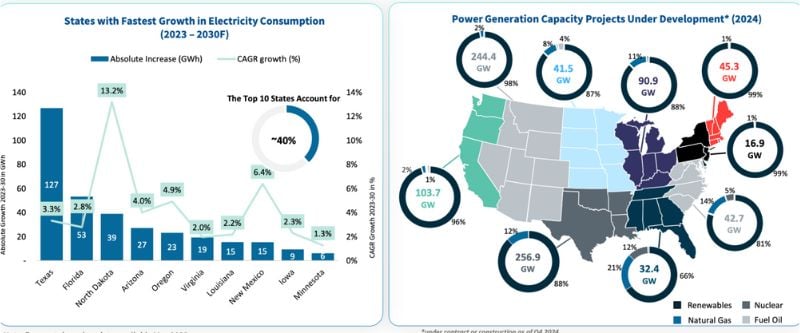
Regional differences in consumption and capacity
Regional differences in consumption and capacity. Image used courtesy of NAED
 

For electronics distributors, these variations will require careful investigation.

“It’s important to evaluate the types of projects that are poised for growth in your area and understand how they may intersect with the products and services a distributor currently offers,” TenEyck commented. “From there, a distributor’s team should prioritize those opportunities based on the value and risks/investments required—how far are they willing to venture from their core areas? Too, it’s important to be selective about those opportunities and decide what makes the most sense for their companies and resources.”

The report also advises distributors to collaborate with manufacturers and project developers about the new technologies, services, and strategies required as the energy industry grows and changes.

“For example, electrification in an industrial building could lead to upgrading legacy systems from gas-powered equipment to electric, integrating energy storage, or optimizing for renewable power sources,” TenEyck stated. “A manufacturer–distributor partnership could be crucial here to help ensure the solutions work efficiently, safety needs are met, and performance standards are in place.”

Engineering the Future

Sarb said the takeaway from the reports is that anyone working in power electronics must be aware of the changes and adapt to them.

“If you’re an engineer with a company that serves this [industry], utilities or the electric or energy space, these are different projects than maybe what we traditionally served,” he said. “If we’re talking about renewable installations, small nuclear for data centers, or whatever it is, that just shifts how we behave.”

Source URL : https://eepower.com/tech-insights/reports-energy-transition-data-centers-opportunity/#
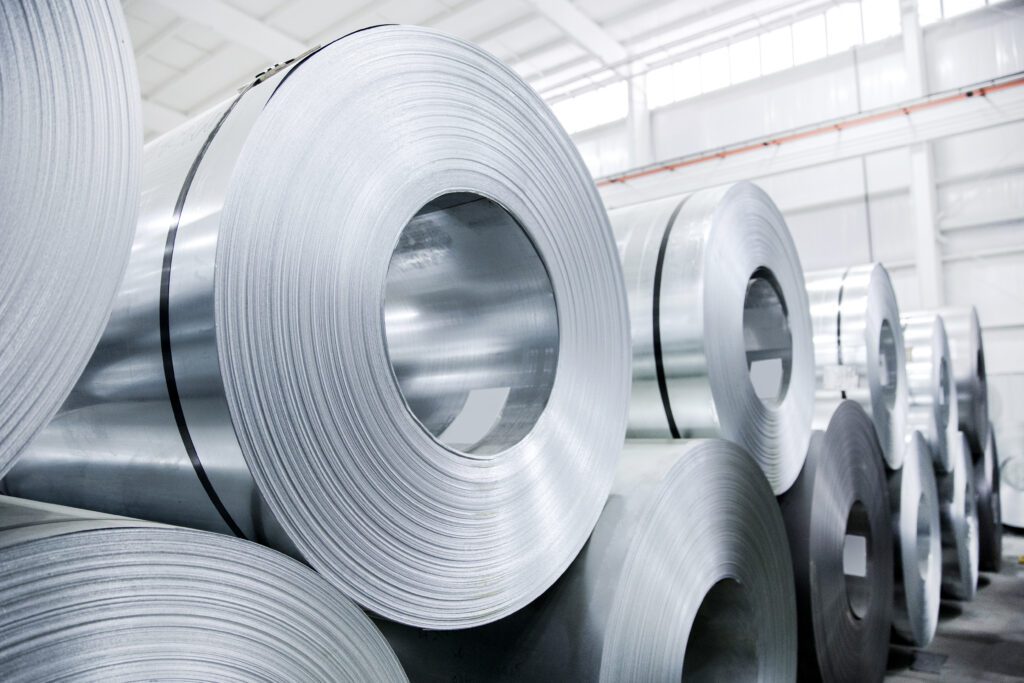

Aluminium’s Rising Role in the Future of Mobility – Automotive World

Aluminium offers a number of benefits when it comes to producing safe, lightweight vehicles.

By: Megan Lampinen

Steel has served as the backbone of vehicle manufacturing for more than a century, but the shift to new mobility is disrupting the material mix. Over the past few years, aluminium has emerged as the fastest growing automotive material. Its lightweight properties, durability, safety and sustainability advantages have made it a key tool in the industry’s adaption to new mobility demands.

What was once reserved for luxury and high-performance vehicles is now widely used across all vehicle segments, from compact cars and SUVs to sports cars and pick-ups. It is finding its way into key applications such as body panels, bonnets/hoods, doors, body in white structures and electric vehicle (EV) battery enclosures.

Not only is aluminium now used in a wider variety of vehicles and applications, but the amount used per vehicle has also increased. A 2022 study commissioned by European Aluminium and conducted by Ducker Carlisle found that the average amount of aluminium used in European cars has increased by 18% from 174kg in 2019 to 205kg in 2022. This trend is set to continue, with the average aluminium content projected to reach 237kg per vehicle by 2026 and 256kg by 2030.

Market drivers

There are several factors driving demand. To start with, aluminium offers a notable vehicle weight reduction compared to traditional steel. According to Alumobility, it has one-third the density of steel. When comparing two identical vehicles (one steel and one aluminium), both with equal stiffness and load-carrying capacity, the aluminium vehicle body will be up to 45% lighter.

Aluminium
Aluminium offers a range of benefits to automakers, particularly around lightweighting

“Greater use of aluminium aligns with the growing emphasis on lightweighting, which has gained prominence as automakers look to balance cost and sustainability without compromising structural integrity,” says Michael Hahne, Vice President Commercial for Europe at aluminium supplier Novelis. “Replacing 400kg of steel with 240kg of aluminium can dramatically reduce weight and material usage.” This has a direct impact on fuel efficiency or EV range. “Its weight advantage is a game-changer for EVs, where battery range is a major consideration,” he tells Automotive World. The industry’s shift toward electrification is increasing demand for lighter materials in general to combat the additional weight of the battery.

It also contributes to secondary savings in areas like braking and suspension systems, as lighter vehicles require smaller braking and suspension components. In the previous example, where 400kg of steel is replaced with 240kg of aluminium, the vehicle will also see another 40-60kg weight saving from other areas.

Aluminium performs well on the safety front, as it absorbs more energy than steel per kilogram, meaning occupants are better protected from intrusion into the safety cell. As the vehicle carries less mass into a collision, aluminium bodies can be less damaging in incidents involving other vehicles, cycles, and pedestrians. “Aluminium continues to be an invaluable material for vehicle safety,” notes Hahne. “Crash tests confirm vehicles made lighter with aluminium bodies earned perfect five-star crash ratings.”

Aluminium is finding its way into a number of EVs

Aluminium also plays a key role in enabling a circular economy. Closed-loop recycling systems allow OEM production scrap, as well as scrap from end-of-life vehicles, to be repurposed in a circular manner, lowering carbon emissions within the manufacturing process compared to primary aluminium production. Novelis recently developed the world’s first automotive aluminium coil made entirely from 100% recycled end-of-life vehicle scrap. This material, designed to meet the industry’s tough standards for car body outer skin applications, marks a notable milestone in support of automotive circularity.

“Aluminium stands out for being infinitely recyclable, maintaining its material properties through countless life cycles,” adds Hahne. Recycling aluminium saves up to 90% of CO2 emissions compared to primary aluminium production, making it a cornerstone material for wider carbon reduction strategies.

Where next?

Despite the numerous advantages, aluminium generally carries a higher cost than steel. It also entails more energy-intensive production and specialised manufacturing requirements. But R&D advances from players like Novelis promise further improvements both within the material itself as well as manufacturing techniques. For instance, the company has been working on aluminium roll forming, a process that precisely shapes metal into complex automotive structures. This can reduce component costs and improve structural performance and safety, particularly in EVs where battery protection is critical. Novelis has also been working with Jaguar Land Rover on a new aluminium skin alloy, which features up to 85% recycled content and is 95% more energy efficient to produce.

While aluminium use is growing, steel isn’t standing still. Developments around advanced high strength steel have produced significant weight reductions, with the latest grades claiming to cut vehicle weight by 35-40% compared to traditional steel. The argument from aluminium proponents like Novelis is that its unique properties bring significant advantages that go beyond the drawbacks. “Shifting the conversation from upfront expenses to the long-term value and performance gains offered by aluminium is essential to unlocking its full potential in revolutionising the auto industry,” emphasises Hahne.

For Construction Pros : 6 Practical Ways Construction Companies Can Use AI to Save Time and Boost Profit

From automating quotes and invoices to streamlining bids and lead generation, construction firms can use AI tools to cut back-office overhead, improve accuracy, and increase profitability.

Authored By : Fabien Cros


In the construction industry, discussions about the potential of artificial intelligence (AI) to help companies both work and build smarter have ranged from using AI for project planning and design to employing the technology for construction site management and energy optimization at maintenance facilities. All that buzz has produced more confusion than adoption, raising two key questions: where should we begin to achieve the most immediate and impactful results, and does every AI implementation require expensive custom development? 

The answer to the first question is that the most direct route to a successful AI experience is to focus initially on cutting back-office overhead and growing your sales pipeline. The answer to the second is that custom applications are not always necessary. Pre-built AI solutions that can be easily tailored to each firm’s needs can now help tame the flood of paperwork created by outdated information-gathering processes, automate administrative tasks and take advantage of newer tools like ChatGPT to improve lead generation.

Here are six practical use cases that enable you to put AI to work in your business quickly, affordably and with measurable bottom-line results, providing a strong edge in today’s fiercely competitive construction environment.  

1. The Quoting AI Agent: Stop Wasting Time on Paperwork, Win More Bids

Every job starts with a quote, and you know how much time it takes to get one right. Manually interpreting blueprints, counting materials, and estimating hours is a tedious, labor-intensive process. It’s a major bottleneck that keeps you from bidding on more projects.

An AI-powered Quoting Agent changes the game entirely. These intelligent systems can instantly read blueprints, identify specs, quantify materials, and generate precise cost estimations with incredible speed. It’s not just about being faster; it’s about freeing you up to focus on what you do best. By automating this process, you can bid on more jobs, enhance your accuracy, and spend less time at the office, ultimately boosting your profitability and keeping your crews busy.

2. Intelligent Data Management: Your Project History, a Click Away

How much time have you wasted trying to find that one key document from a job you did years ago – perhaps a safety record for a subcontractor, a specific supplier’s invoice, or a project’s materials list? All that information is locked away in various files, computers and emails. This unorganized data is a constant headache.

An AI-driven data management solution turns that headache into a powerful advantage. It centralizes all your project data, no matter where it was originally stored. Using simple language, you can now find exactly what you need in seconds, not days. This improves your operational productivity by giving you instant access to your company’s collective knowledge, allowing you to make smarter decisions faster and keep projects moving forward without costly delays.

3. The Bid & RFP AI Agent: Beat the Competition with Data-Driven Bids

To win the big jobs, you need to submit more than just a good price; you need a powerful proposal. Manually researching public bids and gathering intelligence on a project’s location or client is time-consuming and often based on guesswork.

This is where the Bid & RFP AI Agent provides a serious advantage. The AI can find and monitor all available bids, including public ones. More importantly, it automatically gathers thousands of data points about a potential project, analyzing the neighborhood, building history, and market conditions. This lets you go from a standard proposal to a data-driven, pre-written one in minutes. The AI leverages this information to inform your best strategy, pricing, timeline, and even recommend specific approaches, helping you submit a customized bid that stands out and significantly increases your chance of winning.

4. Harnessing AI for Next-Generation Lead Generation: Get the Phone to Ring

How do new clients find you? They go online and they ask questions. But now, they’re using platforms like ChatGPT to get recommendations: “Who are the top contractors for commercial builds?” or “Which firms have the best safety record for industrial projects?”

This is your opportunity to get ahead. Being proactive and using AI to show up on these platforms will capture new, high-value leads. An AI-powered marketing strategy can help you understand these natural language queries and automatically generate content that highlights your firm’s unique strengths and experience. By integrating this into your business now, you can get a jump on the competition and ensure that the phone keeps ringing with qualified clients.

5. Automating Accounts Payable and Receivable: Less Headaches, Better Cash Flow

For any business, cash flow is everything. Yet, the essential processes of paying bills and collecting from clients are often manual, prone to errors, and a huge drain on time. From processing hundreds of supplier invoices to chasing down late payments, these tasks take you away from the job site.

AI-powered solutions for Accounts Payable and Receivable are exceptionally good at these transactional duties. They can automatically extract and verify data from invoices, flag discrepancies, and send automated payment reminders. The financial impact is immediate: less administrative overhead, fewer errors, and a more robust cash flow. By letting AI handle these tedious tasks, your team can focus on what truly matters: keeping projects on schedule and on budget.

6. AI for Administrative Automation: Ditch the Paperwork, Get Back in the Field

Administrative work in construction firms can be a nightmare, pulling valuable people away from managing projects and focusing on safety. Previous automation tools were often too rigid for the unpredictable reality of a job site.

With advanced AI and Large Language Models, the scope for administrative automation has expanded dramatically. AI bots can now handle a wide array of non-core tasks: automatically creating CRM entries after a meeting, drafting routine safety updates, checking inventory levels, and sending reminders to subcontractors about deadlines. This isn’t just about eliminating busy work. It’s about enhancing productivity and empowering your project managers and crew to focus on the high-value work that directly impacts quality and your company’s profitability.

While adopting AI may seem like a heavy lift with unclear benefits, beginning with these six use cases will pay off quickly and affordably. They offer the most direct and impactful path to leveraging AI to drive efficiency and create value that will help you stay competitive, profitable and operating at peak administrative productivity.  


Source URL: https://www.forconstructionpros.com/construction-technology/article/22952296/ducker-carlisle-6-practical-ways-construction-companies-can-use-ai-to-save-time-and-boost-profit

Kurt Ranka on Smarter Pricing Strategies Amid Shifting Inflation – Mission Matters Podcast

Mission Matters Business Podcast with Adam Torres

On this episode of Mission Matters, Adam Torres interviews Kurt Ranka, Managing Principal at Ducker Carlisle. Kurt explains how OEMs and manufacturers can rethink pricing amidst cooling inflation by moving away from cost-plus models toward value-based strategies that better reflect product value, services, and customer perception.

Listen Here : https://podcasts.apple.com/us/podcast/kurt-ranka-on-smarter-pricing-strategies-amid-shifting/id1498253396?i=1000728708120

Ducker Carlisle Partners with NAED to Launch Sector-by-Sector Electrification Study

Powering the Future: Insights on the Growing Electrification Market for NAED Members 

The NAED Electrification Study, conducted by Ducker Carlisle is now being released to the public. NAED is publishing one sector-specific report each week. The first focus: Data Centers — a pivotal sector in the broader electrification shift. Both the Executive Summary and Executive Brief are now available.

As electricity demand continues to grow, the electrical distribution industry is uniquely positioned to help lead the transformation of the energy landscape with the services, materials, and solutions needed to support its customers and drive progress. To help members navigate this shift, NAED’s Education & Research Foundation, presents the research study: Electrification Drivers, Disruptors, and Scaling Your Business.

This study delivers valuable insight into:

  • – What’s driving electrification—and what may disrupt it
  • – The most promising project areas for distributors
  • – How to strategically scale and prepare your team

Ducker Carlisle Merges with Munich Strategy – Expanding Both Firms’ Global Reach 

DETROIT and MUNICH (May 5, 2025) – Ducker Carlisle, a U.S.-based global market research, strategy consulting and M&A advisory firm, today announced a merger with Munich Strategy, a German consultancy that shares its focus on providing strategy, transformation and M&A services for the building and construction, and industrial sectors. The transaction more than doubles Ducker Carlisle’s footprint in Europe, provides Munich Strategy’s German and European customers access to over 100 consultants in the lucrative U.S. market, and establishes the combined firm as a leading resource for global corporate and private equity clients in their shared industry verticals. 

Services available from the merged firms’ 200+-person global team include strategy consulting, transformation, research intelligence and analytics, pricing strategy, supply chain optimization, AI solution development and other expert assistance in helping clients drive growth, maximize performance and gain competitive advantage. The team also offers M&A transaction services including buy-side and sell-side due diligence and value creation to help private equity clients mitigate risk, expedite transaction closings, and advance post-acquisition growth initiatives.   

“Many of our clients are looking for ways to penetrate or expand in the U.S. market, and this merger enables them to leverage the expertise of Ducker Carlisle’s large U.S. consulting team to identify the best strategies and opportunities to achieve those goals,” said Munich Strategy founder Sebastian Theopold, now President of Ducker Carlisle Europe as well as a Ducker Carlisle board member.  “It also enhances our services in other areas including pricing strategy, enriching the strategic toolkit we offer to help clients both grow and optimize their business.” 

“Expanding our global footprint with mergers like this one strengthens our international presence, fosters cross-market growth, and delivers enhanced value to our clients by providing a comprehensive, integrated approach to consulting in our shared vertical markets,” said Paul Gurizzian, Ducker Carlisle CEO. “Add Munich Strategy’s excellent reputation among its German and European clients, and this agreement clearly advances our goal of assisting clients in driving and optimizing global growth.” 

The merger is the latest chapter in the value creation that Ducker Carlisle has achieved with the backing of Boathouse Capital, which has supported the expansion of the company’s consulting services portfolio to meet the evolving needs of clients and dealmakers around the world. 

“Building scale is a key driver of value, growth and competitive advantage for established companies as well as an important contributor to success for an organization’s clients,” said Bill Dyer, Managing Partner of Boathouse Capital. “This merger achieves those objectives by increasing the talent pool available to service clients, combining the market knowledge of both teams, and most importantly by expanding both firms’ global reach.” 

With the merger, Ducker Carlisle now has team members in its global headquarters in Detroit (Troy) as well as in Boston, Paris, Berlin, Munich, Madrid, Lisbon, Shanghai, New Delhi and Bengaluru, India.  

About Ducker Carlisle  

Ducker Carlisle is a global market research, strategy consulting and M&A advisory firm that helps many of the world’s largest companies and private equity firms optimize business performance and accelerate growth across complex markets. Founded in 1961 with offices across North America, Europe and Asia, the firm provides a unique continuum of services to deliver custom, industry-centric solutions enabling clients to maximize business results. For more information, visit Ducker Carlisle I Twitter I LinkedIn  

About Munich Strategy  

Munich Strategy is a German management consultancy specializing in the building materials, construction and industrial sectors. Its clients include leading family-owned businesses and private equity investors in Europe and the U.S. The firm’s core expertise lies in growth and internationalization strategies, as well as in supporting M&A transactions. In addition, Munich Strategy assists companies in transformation processes and in future-proofing their business models. Since its founding in 2006, Munich Strategy has established itself as a leading international strategy expert in its industries. For more information, visit Munich Strategy I LinkedIn 

Ducker Carlisle Launches First Supply Chain Sustainability Certification Focusing on Manufacturers’ Distribution Practices

Initial Evaluation Spans Warehousing, Packaging and Outbound Transportation Policies

DETROIT (March 4, 2025) – Ducker Carlisle, a U.S.-based global market research, strategy consulting and M&A advisory firm, now offers the first certification that recognizes manufacturers for implementing sustainable management practices in the distribution segment of their supply chains. The new Supply Score Certification leverages the firm’s 30+ years of supply chain benchmarking experience to help companies demonstrate their progress toward meeting corporate sustainability goals, differentiate themselves from competitors, and create new business opportunities with environmentally-minded customers and partners.

The new certification currently focuses on measuring companies’ efforts to reduce their carbon footprint in the areas of warehousing, packaging and outbound transportation. Green initiatives in other areas such as inbound transport, returns and reverse logistics, and customer product use will be added as the program expands.

Ducker Carlisle’s benchmarking experts help supply chain, sustainability and corporate social responsibility (CSR) managers determine what data to collect in each area, including any third-party certifications, and then use a proprietary methodology to calculate each organization’s supply chain sustainability score. Companies can earn either Bronze, Silver, Gold or Emerald Supply Score Certification, along with marketing and public relations support to publicize the achievement to both internal and external stakeholders.

Participating companies also have the opportunity to dialogue with other supply chain, sustainability and CSR professionals to share best practices for improving their sustainability performance.

“Accreditations like LEED, UL 2809, ISO 14001 and EcoVadis are valuable indicators of different aspects of an organization’s sustainability efforts, but until now no certification has focused specifically on distribution practices that can play a vital role in reducing a company’s greenhouse gas emissions,” said Nate Chenenko, Ducker Carlisle Principal in charge of the firm’s global benchmarking practice. “By concentrating on the distribution aspect of supply chains, Supply Score Certification provides a meaningful new way of helping supply chain teams demonstrate progress in meeting corporate sustainability targets.”  

One of the first companies to work toward Ducker Carlisle’s Supply Score Certification is construction equipment manufacturer Kubota, which has implemented multiple initiatives in the last several years as part of a campaign to achieve carbon neutrality by 2050.  Strategies that will help Kubota earn the certification include the use of cardboard and plastic balers to compact trash at one facility, a contract to pulverize waste at another location, and investment in a corrugated cardboard shredding machine and reuse of the shredded cardboard as packaging fill. Results have included significant reductions in waste disposal costs, waste hauling trips and associated fuel costs as well as fewer packaging purchases.

“At Kubota, we are focused on working with partners like Supply Score to help identify areas where we can be more sustainable across our supply chain,” said Kathi Dailey, Kubota General Manager. “Understanding what metrics to track and how to track them to reach our goals can be a challenge. We are hopeful that working closely with Supply Score to help us organize our supply chain data will provide a platform that enables us to demonstrate our progress and better collaborate with our peers.”

Supply Score Certification is open to manufacturers in any industry sector.  For more information, email nchenenko@duckercarlisle.com

About Ducker Carlisle

Ducker Carlisle is a global market research, strategy consulting and M&A advisory firm that helps many of the world’s largest companies and private equity firms optimize business performance and accelerate growth across complex markets. Founded in 1961 with offices across North America, Europe and Asia, the firm provides a unique continuum of services to deliver custom, industry-centric solutions enabling clients to maximize business results. For more information, visit Ducker CarlisleTwitter I LinkedIn 

Stone World : Navigating the Political Landscape in 2025

In a recent episode of the Stone World podcast, Rhett Bender, Senior Engagement Manager at Ducker Carlisle, shared insights on how businesses, particularly in the building products sector, might prepare for changes with the incoming Trump administration.

Construction News and Review : Trump’s Proposed Tariff Increases: Impending Reality or Negotiating Tool?

Finance News : Trump keeps home builders guessing on affordable housing

Home builders are navigating a shifting landscape in the affordable housing market. Chris Fisher, Managing Principal at Ducker Carlisle weighs in on the challenges at play.