The Fenestration and Glazing Industry Alliance (FGIA) has released updated industry market data in the FGIA Industry Update of the U.S. Market for Residential and Non-residential Windows, Doors and Skylights, prepared by Ducker Research & Consulting. This report serves as an updated overview of the reports released by the association this past spring. New forecasts included in this update are based on projections of construction activity as of mid-September 2021, including a consensus of current economic and construction forecasts along with input from industry participants on year-to-date shipments.
“FGIA chose to release this update because, as we know, forecasting at a time of unique economic shifts creates challenges for forward-looking market estimates. The latest report indicates changes between April, the date of the previous reports, and September in the overall economic position and forecast for 2021 and beyond,” said Janice Yglesias, FGIA Executive Director.
According to the report update, the changes to forecasts since April have been relatively modest, with positive changes in the residential market as both new housing activity and renovation activity have strengthened relative to the prior forecast, leading to upward revisions of residential product shipment forecasts for the year. Indicators for non-residential construction conversely have softened somewhat, both for the current year and forecasts for 2022 and 2023.
Additional and more detailed information on the residential and commercial fenestration markets is contained in the FGIA 2020/2021 Study of the U.S. Market for Windows, Doors and Skylights (originally published in May 2020 and updated in April 2021), which includes the items listed below.
FGIA U.S. Industry Channel Distribution Report profiles the residential and non-residential market for windows and doors as it flows through the identified distribution channels.
FGIA U.S. Industry Market Size Report quantifies residential and non-residential market volumes, both historic and projected.
FGIA U.S. Industry Regional Statistical Review and Forecasts details information on trends and product relationships.
These reports, along with this September 2021 FGIA Industry Update, are all available for purchase online from the FGIA Online Store.
Audrey Courant, Managing Director, EMEA at Ducker will explore the French market in more detail, showing the detail available in the reports for all the countries under study. Euan Youdale, Editor at Access International will give an overview of the global market.
The new reports will be launched in October to coincide with the webinar. This year, in addition to analysis of North America, Europe and China, a new section will feature analysis of the United Arab Emirates, Saudi Arabia and Qatar.
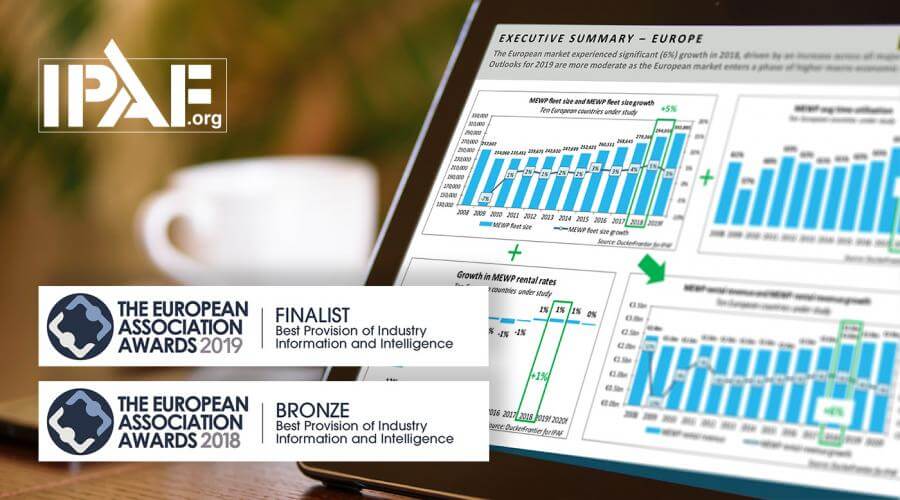
The award-winning IPAF Rental Market Reports, produced by Ducker, are presented in an easy-to-read format and are the definitive go-to guide for those investing in the powered access rental markets around the world.
The reports include the following data:
Market size: Market value, company specialization and size, re-rental/cross-hire, activities outside MEWP rental, market size in units, applications.
Market dynamics: Value growth, market size in units, revenue per unit. Investment: By company type, by country, rental inventory.
Operational aspects: Market variables, utilization rate, age of fleet/average retention period, rental rates.
Market trends and drivers: Market maturity, penetration, GDP per capita, construction growth.
This webinar is pre-recorded and will be available on YouTube through IPAF’s website on 6 October 2021, from 12:00 UK time (GMT+1). Register now to be notified when the webinar is available to watch. All registrants can claim a 25% discount if they purchase any of the IPAF Rental Market Reports 2021.
Ducker has a global team that is dedicated to the Heavy Equipment industry. This team has a long and consistent history of work within the industry. This has allowed for the development of a solid network of heavy equipment end users and dealers who are engaged and willing to provide feedback on industry trends and product perceptions. Ducker is a custom research and consulting provider with the capability of providing a wide variety of information to heavy equipment industry participants. Learn more below
The Ducker Advisory Team actively supports leading middle market private equity firms and corporate development teams for successful inorganic growth with
Over 100 Recent Engagements & Sales Processes Completed
Ducker combines our industry and market expertise with proven methodologies, access to industry participants and expedited processes, to provide clients with the highest quality insights and intelligence they need to make strategic investment decisions in shifting market landscapes. Contact us here to connect with a team member.
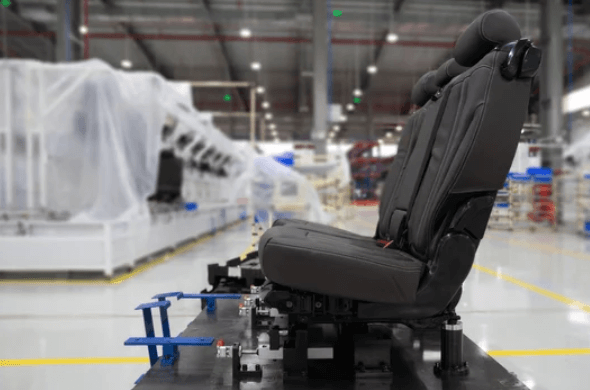
A global automotive OEM supplier of passenger comfort products was interested in the potential acquisition of an automotive supplier with proprietary seat technologies and fluid systems. The client was primarily interested in the addition of the Target company’s proprietary seat technologies to their own portfolio; however, this acquisition would also include automotive fluid supply system technologies.
Having little experience in automotive fluid supply systems, the automotive OEM supplier engaged Ducker to assist in pre-transactional due diligence in North American, European, and Asian markets focused on fluid and vapor management components.
This client is recognized as a Tier 1 and/or Tier 2 supplier to global auto makers and seat suppliers
Issue/Opportunity/Challenge:
The client was presented with the opportunity of a private deal, which would allow them further access to technologies and customer reach within the seat comfort area, (extending beyond their currently capabilities of thermal comfort) and an entry into new technology that provides access to a non-adjacent set of products.
Ducker Solution:
Ducker supplied commercial diligence services to provide the client with an independent assessment of the client’s core market opportunity, competitive landscape, growth opportunities and customer feedback analysis on a global scale in a short time frame. Ducker proposed a multi-faceted solution involving:
An overview and assessment of the valve systems and technology that the acquisition target is supply, including market shifts and substitution trend.
An evaluation of market opportunity and attractiveness accompanied by market size, segmentation, and growth forecasts supported by Ducker’s proprietary market data and historic market presence, as well as deep automotive expertise.
A deep dive into the market’s competitive environment, market share and positioning of the acquisition target, as well as a customer analysis; this was accomplished through in-depth interviews with key stakeholders at major market participants..
Benefits:
Because the client had limited knowledge of automotive fluid system technologies, Ducker needed to quickly acclimate the client to the product category, competitive landscape, distribution strategy, and market evolution considering anticipated regulatory changes. Ducker received accolades from both the client and their financial sponsor for the level of detail and depth of analysis provided during progress updates and in final deliverables.
Ducker’s deliverables included market and technology primers, market opportunity and sizing, growth forecasts, customer sourcing strategies, and extensive competitor profiling.
Client Outcomes:
Through Ducker’s engagement the client received a detailed analysis of markets new to the client, a demonstration of market stability due to high barriers to entry and the regulatory nature of the market, and a roadmap of adjacent opportunities, ultimately providing the client with confidence and certainty to enter the market, complete the transaction and pursue an expanded strategy in the sector.
Ducker combines our industry and market expertise with proven methodologies, access to industry participants and expedited processes, to provide clients with the highest quality insights and intelligence they need to make strategic investment decisions in shifting market landscapes. Contact us here to connect with a team member.
THE DYNAMICS OF NEW EMISSION REGULATIONS IN INDIAN CONSTRUCTION EQUIPMENT INDUSTRY
This white paper highlights the historical, present, and upcoming / planned emission standards in India, its impact on OEMs, and the ways to tackle them. This write-up is the result of interviews conducted by Ducker with several heavy equipment end-users, dealers and manufacturers in the targeted region as well as news articles & other online publications.
SUMMARY
The emission regulations for the Non-Road Mobile Machineries (NRMM) were last updated in 2011, when India implemented Bharat (CEV) Stage III regulation on equipment with 8 to 130 KW capacity. The BS III which was in line with US Tier 2/3 requirements and brought in a uniform standard across all NRMM, covering small engines with less than 8KW capacity to large engine capacity 560KW. The standard targeted 29% reduction in hydrocarbons and nitrous oxide till for engine power less than 37 KW and over 50% for engine power more than 37 KW.
After a span of nearly ten years, the NRMM regulatory environment is poised for a two-stage update in a short span of time, targeting a combined reduction of HC+NOx emission to 85% by 2024.
India is currently in the final stages of implementing Bharat (CEV) Stage IV regulations on NRMM with engine capacity of 37KW to 560KW. And upping the ante, within the next three to four years, the Central Pollution Board Control, Government of India aims to introduced Bharat (CEV) Stage V regulations, further targeting to reduce the PM emission by 40% for diesel engine power greater than 56 KW.
The long road of NRMM regulations started nearly two decades ago when Bharat (CEV) Stage II emission standards for diesel construction machinery were adopted in two stages:
·BS (CEV) II – Phase I Standards implemented on October 2007 covering medium to large engines with engine power ranging from 19 to 560 KW
·BS (CEV) II – Phase II Standards implemented on October 2008 covering only the smaller engines with engine power less than 19KW (were not regulated under the EU Stage I)
The Indian construction equipment industry will remain very dynamic in this decade and see significant changes in regulatory environment. The forced changes from the emission regulations offers significant growth opportunities to all the value chain participants. However understanding customers concerns on acquisition cost, ownership cost, equipment performance and fuel efficiency due to implementation of emission regulations is critical. Both OEM and suppliers may have to form multi-pronged strategies on technology shifts and sourcing to stay ahead of the competition and minimize the impact on its growth plans in India. Connect with the Ducker team to download the full whitepaper and learn more on how to refine your strategy to address concerns and gain competitive edge.
NEW PRODUCT DEVELOPMENT IN INDUSTRIAL PRODUCTS INDUSTRY
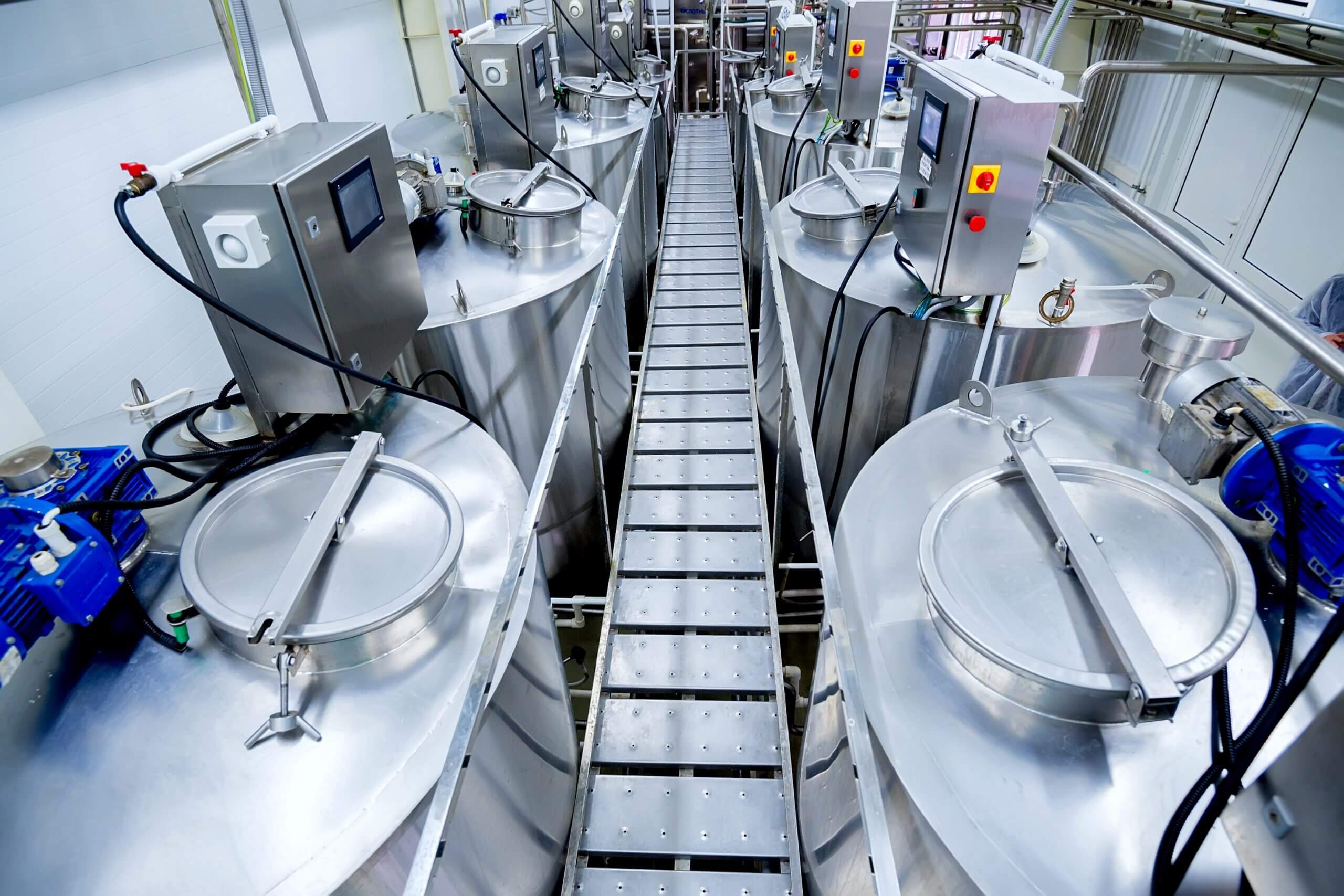
Ducker was approached by a global supplier of specialized processing equipment and engineered solutions serving critical processing industries such as food & beverage and industrial markets. The client firmly believes that continuous innovation and delivering increased value to customers are vital to advancing competitive differentiation, business growth and success. The early stages of new product development center on the discovery of customers’ unmet needs, latent needs, workarounds, and desired business outcomes leading to ideation and potential concepts to consider for development.
Ducker was engaged to build a consistent and repeatable process to implement internally, with the goal of continually feeding the pipeline with innovation ideas and concepts. By adopting a scalable and repeatable process within the client organization, customer-centric innovation and accelerated commercialization become a core competency and ultimately, lead to enhanced market and competitive positioning.
The client holds a leading competitive position underpinned by its reputation for innovative design. To maintain its competitive edge, the client engaged Ducker to develop a New Product Development Playbook, designed to increase its innovation pipeline and accelerate commercialization of new technologies.
Ducker’s proprietary market intelligence, tailor-made market research and proven methodology developed by an expansive base of leading researchers and analytical minds delivers impressive outcomes and faster commercial results. To learn more and connect with the Research & Consulting team, click here.
Ducker continues to monitor the industrial and manufacturing segment dynamics. Key insights through Covid-19 yield interesting basis for future growth. We recommend highly segmented, targeted views of the sector to generate opportunities and outperform the market.
Post-Covid manufacturing and industrial sectors are poised for growth driven by:
A return to work and expanding GDP
Domestic production expansion due to supply chain disruptions
An increase in product prices
The Biden Administration’s focus on “Made in America”
Since 2015 all sub-sectors of the industrial economy saw expansion, including significant growth of:
Computers and Electronics
Chemical related products
Transportation and Technology
Technology and electronics investments from data centers, digitalization and green energy investments (wind, solar, etc.)
Growing demand and developments, especially in the last decade (2010-2020) in key sectors such as aviation and aerospace led to the growth in other transportation equipment sectors
Business operators are anticipated to not only replace older equipment but also improve the efficiency of operations through new technology and smart production solutions.
To win in the post-Covid manufacturing and industrial sector Ducker recommends businesses to:
Build strategies at the sub-sector level
Align business solutions to smart and technology enabled solutions
Enhance or add critical ESG assets and policies
To learn more and gain access to the full Industrial Trend & Forecast report , click here. For the latest insights and implications for global business within the Industrial and Manufacturing industry & to connect with a team member, contact us here.
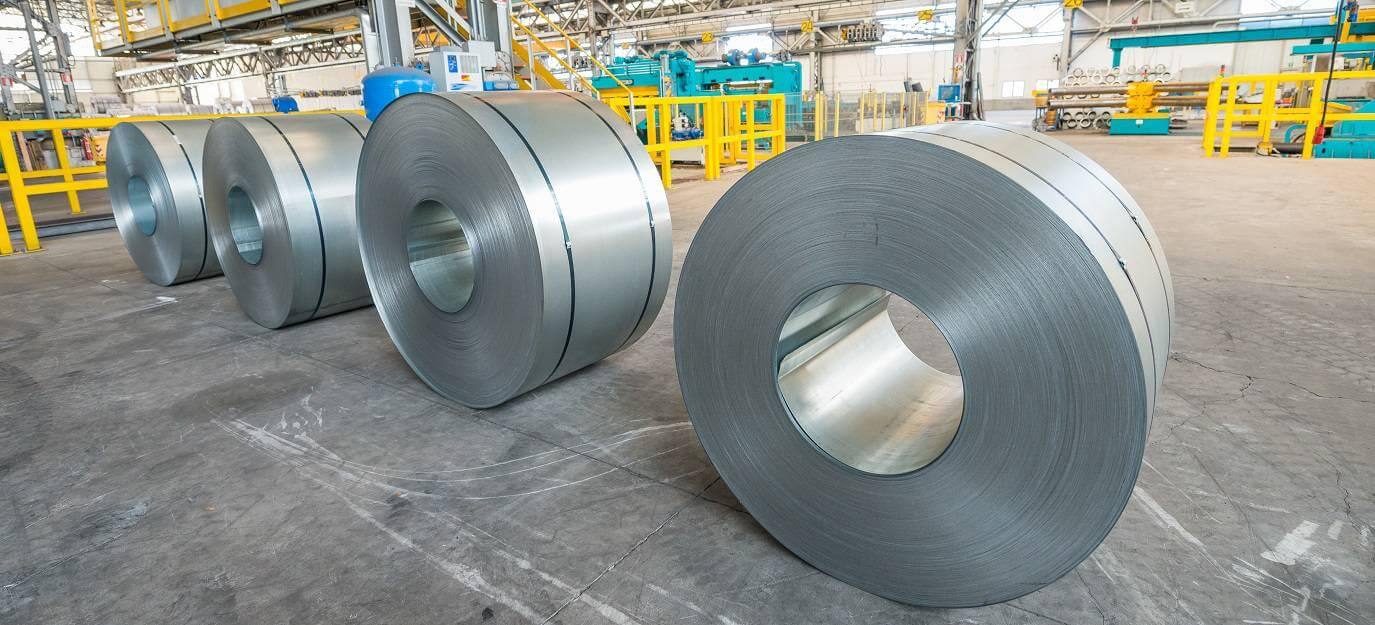
THE ELECTRIFICATION TREND’S IMPACT ON THE ALUMINUM INDUSTRY
The automotive industry is currently experiencing a deep transformation, with overarching mega trends towards connected vehicles, automated driving, shared mobility, sustainability, and last but not least electrification. Electrification has a direct and major impact on the Aluminum industry. Electrification has a direct and major impact on the Aluminum industry.
Last month, Ducker Managing Director, Hélène Wagnies discussed how the electrification trend is moving ahead in her keynote delivery at the Aluminum Digital Talk in Dusseldorf, Germany.
Q&A with Hélène Wagnies:
To put the electrification trend into context, is it important to point out that the automotive industry was strongly hit by the COVID-19 crisis?
Yes, car production in the EU27+UK decreased by 23% in 2020 as compared to 2019. This decrease was directly linked to the sanitary situation and the hard lockdowns, which prevented both demand and supply to run at a normal pace
Production is progressively recovering now; LMC expects the industry to be back to pre-covid production level in 2022
We won’t have a full recovery this year already, partly due to supply chain disruption issues – for electronic components in general, and specifically for semi-conductors used for chipset production
Did COVID-19 stop, or slow down the vehicle electrification trend?
No – on the contrary, we witness an acceleration of electrification.
We used to have 96% of what we call ‘ICE only’ in 2018 in European car production – meaning 96% of vehicles with an internal combustion engine and no form of electrification. We still had about the same share of ‘ICE only’ in 2019, but in 2020 there was a sudden boost toward electrification.
In 2021, LMC expects ‘ICE only’ to have already dropped to a 70% share and further projections predict no more than 17% for ‘ICE only’ by 2028 – that is definitely a drastic change.
What has been the main driver for the sudden acceleration of electrification in 2020?
Obviously the stricter CO2 emission regulation (EURO 6d) which came into force in 2020. It limits the CO2 tailpipe emissions to an average 95 g/km, as compared to 130 g/km in 2015
In order to comply with European regulation, the automotive industry has made tremendous investments toward electrification. It translated into nearly 70% of the new car models that were launched in 2020 being electrified (these were 83 out of 122 new models)
Knowing that electrification is accelerating, how does the electrification trend impact the Aluminum industry?
It does – by modifying the aluminum content needed in a car
The two dominating electrification forms will be the mild hybrids (MHEVs) and the battery electric vehicles (BEVs): currently 14% MHEVs and 7% BEVs in European car production – forecasted to grow to 39% MHEVs and 30% BEVs by 2028!
Mild hybrids are very similar to ICE only vehicles – they have a few additional components, but it does not significantly change the aluminum content in the vehicle
What really change the equation are the heavy batteries found in BEVs. And because the strong acceleration in the electrification trend is largely in favor of BEVs, it makes it even more important to track the evolution of BEV production and BEV aluminum demand
The comparison between previous LMC forecast from Q2 2018 and the latest forecast from Q1 2021 shows that the expected BEV market share for 2028 is 11 pp higher now than it used to be 2 years ago (vs. only 4pp higher for MHEVs, and 1pp for PHEVs)
How is the average aluminum content in cars evolving?
Ducker is the industry benchmark to track the evolution of the aluminum content in cars on an ongoing basis – we do the tracking and forecasting for the European and North American Aluminum Associations, as well as for industrial corporate clients along the value chain
Based on our latest internal analyses, we estimate the current per vehicle aluminum content for cars being produced in Europe at 187 kg today (2021). We forecast it to increase by 24 kg over the next 6 years (bringing it to 211 kg in 2027)
How does the average aluminum content per car differ between a BEV and an ICE?
Through the heavy batteries, BEVs have a high need for lightweighting. Currently a BEV contains on average 101 kg more aluminum than an ‘ICE only’:
there are 62kg less aluminum in a BEV due to ICE powertrain & transmission components no longer needed,
but there are also 163 kg aluminum more needed for the battery, the electric powertrain, and additional lightweighting measures – mainly in the BiW, closures, and chassis
Why do BEVs have a high need for lightweighting while they have zero tailpipe emissions?
First, the range. Lightweighting allows improvement of the range in order to meet consumer expectations.
Second, the vehicle handling. Limiting the vehicle mass is also beneficial to the riding behavior.
And third, to avoid secondary costs that are generated when a vehicle gets significantly heavier (e.g. need for more robust brakes, for more robust suspension, etc.)
Looking ahead beyond 2028, how sustainable is the electrification trend? Do we head toward a full BEV future?
Electrification is here to stay, driven by regulation strongly pushing BEVs as zero emission vehicles. However, it is reasonable to doubt that a 100% BEV penetration can ever be achieved. A 100% penetration would require that:
Raw materials needed for battery production would be available in a sufficient amount and at an affordable price.
The electricity needed to fuel an entire fleet made of BEVs would be available in a sufficient amount, and at the right time (dealing with charging peak hours).
Requirement of battery recycling technologies to be able to recycle all materials of the batteries (not only the cathode but also the anode) for re-use in Automotive
A dense public charging infrastructure be implemented.
All of this would have to take place without significantly increasing BEV production and operation costs in order to ensure affordability.
This all means that without a game-changer, the BEV penetration will have to plateau at some point. What could be a game-changer?
Solid-state battery technology would be an important and likely one – with an energy density twice as high as current technology, shorter charging time (100% charge within 10 min) and expected higher cell stability (meaning lower risk for cell runaway and fire).
Solid-state would be a strong enabler for BEVs to gain further market shares by displacing the raw material limitations. However, it is still uncertain if and when this technology will reach series maturity as no solid-state battery prototype exists as of today.
SOLID POWER and SAMSUNG SDI are the most advanced with regards to solid-state technology, with first prototypes announced for respectively 2022 and 2023 (NIO made announcements about semi solid-state applications), meaning first series applications possible at the earliest from 2027, and potential larger adoption after 2032.
What will happen if the series introduction of solid-state battery doesn’t prove to be possible or gets postponed?
It will increase the chances for alternative decarbonization technologies such as hydrogen and eFuels to gain traction and capture more market shares, earlier. Further R&D is required to improve these technologies and reduce the associated costs, but both eFuels and hydrogen have the advantages that:
The existing refueling infrastructure can be utilized – no tremendous infrastructure investments required.
They do not imply longer refueling or charging time as BEVs do.
Low-carbon hydrogen production can be achieved with local production at refueling stations, avoiding the need for hydrogen transport.
And eFuels have the huge advantage that no investment is required on the vehicle itself – they can be used in ICE vehicles without any major modification.
What is the most tangible outlook in a 15 to 20 year timeframe?
A mix of several decarbonization technologies:
with BEVs relying on solid-state batteries
with fuel cell electric vehicles using low-carbon hydrogen
and hybridized ICE vehicles running on eFuels (or still on fossil fuels in some regions of the world)
How can the industry deals with all these uncertainties related to the evolution of technologies, the associated costs, the availability of raw materials, the regulation, etc.?
This highlights how crucial it is for industry participants across the value chain to monitor and anticipate what happens with markets, technologies and OEM design decisions.
Ducker’s Automotive & Transportation team is at the forefront of key trends impacting the industry. Ducker is here to help navigate changing markets, help de-risk strategic decisions, and support the development of strategies for the near and long term. We help our clients re-allocate their capacity, and/or re-orientate their capabilities to be best aligned with the parts and technologies they should focus on in a currently very fast changing industry.
Visit here for the latest insights and implications for global business, or contact us to connect with a team member.
Conversations with Carlisle: Living Up to Our Core Values
Introduction
Core values define a firm – its people, its environment, and the way it does business. The values a company espouses drive everything that company does; and at Carlisle & Co, our core values define who we are and are part of everything that we do – from interacting with one another and with our clients, to initiating new business opportunities and executing work for our clients. Over the past two years, we made it our mission to revisit our values, to redefine them, and to ensure that each and every one of our team members is creating an environment that embodies those values. It was through this process that we formalized what had long been a driving force in all that we do, our four core values of integrity, partnership, leadership, and excellence.
Now, we have decided to start a conversation with our team to discover what these four values mean to our people. In this first installment, we dig into WHY we chose these four values, asking some of our senior people their thoughts and perspectives. In the next few posts, we will continue this conversation with team members at every level, across the organization, to see what each value means to our people.
Meet Carlisle & Co’s Leaders
Paul Gurizzian | CEO
Paul is Carlisle’s CEO and is responsible for the day-to-day management of the firm
Charlotte Tang | Director
Charlotte leads Carlisle’s data collection, standardization, and benchmarking activities
Jen Cubell | Director
Jen leads Carlisle’s internal professional resources for employee recruitment, retention, training, and development
Korin Hasegawa-John | Director
Korin leads Carlisle’s Strategy Portfolio, for all heavy equipment OEMs
Nate Chenenko | Director
Nate leads Carlisle’s North American and European parts benchmarking activities
Q: Why did Carlisle choose to focus on the four core values of integrity, partnership, leadership, and excellence?
As a tight-knit firm, we take pride in fostering a culture where our employees feel respected, have opportunities to grow and develop, and have a chance to be creative in their work.
Paul Gurizzian | CEO
Nearly two years ago, we re-imagined our internal strategy as a roadmap to 2025. To support this strategy, we focused on formalizing our core values. When I say formalize, I think most of us were unified in our values over the long history of Carlisle, but we had different emphases. Working up and down the organization, we settled on integrity, partnership, leadership, and excellence because ultimately these are the guiding values we need to be successful…for our clients, our employees, and our shareholders.
Jen Cubell | Director
When we decided to re-examine and “formalize” our values as part of our larger initiatives around firm culture, we wanted to make sure we were capturing that which was most important to our employees at all levels and across all areas of the firm. We conducted a number of surveys and held focus groups, in order to make sure that we had input and buy-in from up and down our organizational structure. These core values encapsulate all our conversations around a commitment, first and foremost to doing the right thing; and then also, to making sure that we are (i) working together with our teams and clients towards common goals, (ii) doing the highest level, cutting edge work, and (iii) making sure we achieve the ultimate objective of client delight, each and every time.
Korin Hasegawa-John | Director
The culture committee spent a lot of time as a full team talking about all the different things that were important to us. I think we came up with about 30 or 40 in the first pass. As we discussed all of these important concepts, and people talked about what made them important, we figured out that we could group a lot of them together, and those groupings became the four core values we have today.
Charlotte Tang | Director
We chose these core values to reflect our commitment to both our clients and our colleagues. As a tight-knit firm, we take pride in fostering a culture where our employees feel respected, have opportunities to grow and develop, and have a chance to be creative in their work. This results in the highest quality of work for our clients, as seen through our commitment and dedication.
Q: Are there specific ones that resonate the most with you?
At the heart of all of our other core values is integrity. Honesty and an uncompromising adherence to strong moral and ethical principles and values is at the center of all that we do.
Nate Chenenko | Director
I think about the core values as answering the question “who would I want to work with?” Our core values are actually listed in the order that I think of them, and there’s a progression:
I only want to work with people who have integrity. Personally, no matter how good someone’s work is, if they lack basic integrity, I’m not interested in working with them. Professionally, if I can’t trust them, I also can’t trust the work they do
Partnership is next because once I know I can trust someone, they have to be pleasant to work with. Foremost, this means they respect me, my teammates, and their teammates
Once someone has established that they have integrity and they’ll be a good partner, I want to work with someone who pushes me (leadership) and produces quality work (excellence). I can lump these two together, but they’re only important because we have already established a foundation of integrity and partnership
Jen Cubell | Director
I think at the heart of all of our core values is integrity. Honesty and an uncompromising adherence to strong moral and ethical principles and values is at the center of all that we do. When we are recruiting candidates, it is important for us to be able to speak about who we are, from a corporate-values perspective; and I am proud of and appreciative of being at a firm where above all else, we are committed to doing the right thing.
Korin Hasegawa-John | Director
They’re all important, of course! But I think integrity is the most important to me. Integrity is the one core value that is unconstrained by outside factors. Partnership needs a partner; leadership requires a team; excellence is relative; but integrity is a value that can and should be nurtured by the individual. Because of this, it’s the most exacting of the values and requires the most introspection and effort.
Paul Gurizzian | CEO
As CEO, I think a lot about integrity. We break integrity down into a number of sub-values including honesty, accountability, commitment, and trust. Unfortunately, we live in a time where many institutions compromise their integrity. Integrity is foundational and truly the way that Carlisle distinguishes itself. I can think of no better offer to prospective employees than saying and committing that as a team, we strive to work with integrity each day.
Q: How, as Carlisle leaders, do you foster a culture that promotes these values?
The most important thing is to lead by example. You cannot expect others to do things which you are unwilling to do yourself.
Korin Hasegawa-John | Director
I think the most important thing is to lead by example. You cannot expect others to do things which you are unwilling to do yourself. I try to be open about how I, as an individual, interact with and think about the values. To be honest, this is probably an area for more exploration and better development.
Paul Gurizzian | CEO
It starts with me. The best way to change others is to change oneself.
Nate Chenenko | Director
I spend most of my leadership energy on integrity. This includes a few things. First off, I own my mistakes (this is honest, it builds trust, it proves that I’m holding myself accountable, and it ensures that team members know perfection is not possible nor expected). Then, I take some / most of the responsibility for the mistakes that others on my team make (I assume if I manage someone and they fail, it’s because I didn’t teach them well. This is my starting point). And lastly, I celebrate successes (I put this in integrity because team members need to trust that their good performance will be recognized).
Jen Cubell | Director
The importance of living our values starts at the top, with our leadership. The most critical way to foster a set of values is to live them and to model them. To a person, I have found our leadership to be committed to these values, to living them, and to modeling them for our more junior staff.
Q: How do you measure performance? What does success look like to you in living up to these core values?
The core values are things that we have to continuously strive towards, embody, and consider in our day-to-day thoughts and actions.
Paul Gurizzian | CEO
Good question, as we are in the business of measuring outcomes. I think about this two ways: sentiment and results. In terms of sentiment, we survey our employees along these values periodically, and we surveyed our clients when we rolled out our new strategy. These surveys are a good way to measure perception. In terms of results, we look at employee retention, financial results, and client results based on our recommendations, findings, and their willingness to continue working with us on new engagements.
Korin Hasegawa-John | Director
What I realized is that our core values are intangibles. It’s impossible to measure performance in any of them – which I think is intentional and good. If you can measure something, it’s a goal, not a value. The core values are things that we have to continuously strive towards, embody, and consider in our day-to-day thoughts and actions. To me, success is based on feelings and observations – can I see peers and colleagues referencing and living up to our values more frequently? Are our discussions around embodying the values occurring in the context of our client-facing projects? I hope we achieve the latter on a consistent basis, but it’s a continuous process that requires a lot of work.
Charlotte Tang | Director
Success for me would be happy colleagues who feel valued, respected, and like part of a team. Success is also high quality, accurate, and innovative results for our clients.
Jen Cubell | Director
For me, success doesn’t mean we never fall short; success means I can look at any current or prospective employee and tell them that these values are both our reality and are aspirational. I can speak to any member of our team and feel confident in saying that when it comes to who we are from a values perspective, at Carlisle we do our best to walk the walk.
Continuing the Conversation
Stay tuned for our next piece of the conversation, where we will survey our colleagues across the organization to see how we are living up to the first of our core values: integrity.
WHEN WILL AUTOMOTIVE PRODUCTION VOLUMES RETURN TO NORMAL?
It is difficult to predict the return to normal production rates. It is even more difficult to know when the production volumes will be sufficient not just to alleviate the shortage effect, but also to recover the lost volumes. Auto Forecast Solutions had predicted a shortage loss of 2.6 million vehicles overall this year and has now raised this number to 4 million vehicles. AlixPartners predicts about 3.9 million vehicles lost for 2021, but that number seems very conservative given the magnitude and proliferation of supply disruptions. Ford announced a 1.1 million vehicle loss globally for this year at the group level. Therefore, the 2021 loss of volume could reach 7 to 8% compared to the initial global forecasts. This means 6 to 7 million vehicles missing for 2021, and the pessimistic scenario of a 10% loss (8.7 million vehicles) could very much become realistic.
Amidst the second quarter of the year, there’s a lack visibility as to when the supply of electronic components for the automotive industry will return to normal. Inventories are low, and replenishing them will take time, as will serving customers who are waiting to replace their vehicles. The North American automotive market is constrained and is unlikely to make up for lost volumes before 2022 if not 2023. Automakers will certainly have to revisit their launch schedules and be patient to get out of this situation. It remains to be seen what lessons will be learned in terms of procurement, purchasing policy, parts inventories, and the consideration for proper strategic intelligence.
A serious revamp of the global chip production is now being in the mind of everyone. As it sits, US is only producing 12% of the global chip supply and Europe at 10%. China has planned a 150-billion-dollar investment to increase its production. Taiwan’s TSMC invested 28 billion to add new lines. But it may take decades for the US to reach the ideal target of producing 30% of the global microchips to become self-sufficient, as the US was producing 37% of the global production share of semiconductors and microelectronics in 1990. It shows the importance of a long-term strategy for sensitive industries, and the need for appropriate strategic intelligence.
Ducker’s Automotive & Transportation team is at the forefront key trends impacting the industry. Ducker’s unique expertise in running custom market research and consulting services helps clients address specific growth questions and business challenges. Visit here for the latest insights and implications for global business, or contact us to connect with a team member.