Slowdown in Vehicle Electrification in Europe

Slowdown in Vehicle Electrification in Europe

Exploring the Factors Slowing Vehicle Electrification in the EU:


The electrification of vehicles and machinery in industries like automotive, marine, and off-highway machinery is progressing more slowly than initially anticipated due to several challenges. Consumer expectations for greater range, insufficient charging infrastructure, and economic uncertainties have hindered the adoption of Battery Electric Vehicles (BEVs), with many consumers favoring hybrids or delaying purchases altogether. This slowdown has forced OEMs like Ford, Volkswagen, and Mercedes-Benz to reduce BEV investments and pivot towards hybrid models, while financial pressures have impacted suppliers like ZF Group, Northvolt, and Bosch.

Beyond the automotive sector, BEV adoption in marine and off-highway industries has also declined, further straining supply chains and production forecasts. Government incentives and regulatory support play a pivotal role, but reductions in European subsidies have contrasted with U.S. policies like the Inflation Reduction Act, which successfully boosted BEV adoption. Moving forward, a coordinated effort is needed to implement comprehensive financial incentives, enhance charging infrastructure, and drive technological advancements to revive momentum and ensure a gradual yet steady transition to electrification.

Thinking of Implementing Pricing Software? Get Your Pricing Strategy Right.  

Thinking of Implementing Pricing Software? Get Your Pricing Strategy Right.

Unlocking Value: The Crucial Role of Strategy in Maximizing the Impact of Pricing Software

Back in the 1990s, many companies purchased big, new ERP systems at great expense. The CEOs and boards of these organizations were assured that “yes, it is expensive, but it will pay for itself in just a few years.”  

Unfortunately, in many cases, the financial benefits didn’t materialize as planned. Why? Often, these systems were installed without thinking through the business context and/or the changes required to take advantage of ERP capabilities. Strategies were not thought through. Processes were not changed in advance of implementation. Data architectures were not updated, requiring continued manual intervention. The ERPs were installed, but only after significant patches and customization to make them work. The result? Wasted investments, wasted opportunities. 

The same can be said about pricing software. It can absolutely have a material effect on the sales and profitability of the business – but only when combined with a strong pricing strategy.  

The benefits of a tight pricing strategy can be significant. Here’s what an aftermarket filtration supplier recently achieved, using a value- and market-based pricing strategy:  

  • 7.9% incremental revenue gain within six months  
  • 90%+ reduction in manual work during the internal price review process 
  • Improved competitive positioning 
  • Alignment of functions across the organization: pricing, sales, product, finance, etc. 

However, you cannot achieve results like these without the combination of pricing software and a solid strategy. The combination is important because you will want the software recommendations to reflect both historical data patterns and current strategies, customer insights, competitive moves and market trends. For example, base or list prices could be loaded into software “as-is,” which wouldn’t allow you to identify opportunities to selectively raise prices based on the market or competitive positioning. Also, customer segmentation may misalign with your company’s strategy and customer behaviors. Implementation can take longer than expected because different functions debate issues that should already have been resolved. 

To determine whether your company is ready for pricing software, consider your answers to these questions: 

  • Do you know the financial value of improving your pricing capabilities? 
  • Have you performed a deep assessment of your current pricing capabilities?  Is your pricing under control? 
  • Could you easily describe your pricing strategy to someone who doesn’t know your business? 
  • Do you know what customers value most, and how your products/offerings compare against your competitors? 
  • How aligned is your pricing to how customers perceive the value you bring? 
  • Do you have a good understanding of the “right” price for different customer segments?  
  • Will the pricing software integrate with your existing systems and strategies? 

If you can answer these questions and have a realistic view of how pricing software will affect your business, then you are ready. If any of the questions are problematic, you will need help to determine the pricing strategy, either in advance or in parallel with the software implementation. 

You can achieve solid improvements in performance with pricing software. However, the addition of a strong pricing strategy enhances your ability to gain bigger, results , faster. 

Our pricing strategy consultants transform your capabilities to deliver higher margins – sustainably – without harming your brand or market share. We identify and clarify strategies, and develop new processes, tools, and organization to deliver high ROI with immediate results. Learn more here.

Inflation is Decreasing. Should Your Prices Fall Too?

Inflation is Decreasing. Should Your Prices Fall Too?

Adapting to Pricing Pressures: How OEMs Can Overcome Post-Pandemic Challenges and Evolving Customer Expectations

Most original equipment manufacturers are struggling to factor a wide mix of variables into their pricing strategies. From the costs of raw materials and supply chain issues to consumer sentiment and labor challenges, OEMs are grappling with a multitude of challenges. As the economy creeps out of pandemic disruptions, pricing strategies won’t get any easier. Decreasing inflation will lead customers to expect lower prices.

What will you do in response to this? Retain the status quo of traditional approaches?

About the Author

Kurt Ranka, Managing Principal

Kurt is a Managing Principal in Ducker Carlisle’s Automotive and Industrials strategic solutions practice, where he focuses on Aftermarket revenue management, price optimization, and supply chain improvement projects. Kurt holds a bachelor’s degree in Economics and Management from Albion College, and a master’s degree in Industrial and Manufacturing Systems Engineering from the University of Michigan-Dearborn. He has 20 years of consulting experience for Automotive and Industrials clients covering pricing strategy, business case development and achievement, implementation, and optimization for B2B and B2C pricing across many channel structures. Kurt has also led many aftermarket operations and supply chain improvement projects for Automotive and Industrials clients. Kurt has authored industry research and thought leadership articles for Industrials clients.

OEM’s Refrigerant Strategy for BEVs and PHEVs Remain Open

OEMs Refrigerant Strategy for BEVs and PHEVs Remains Open

Discover the latest insights from Ducker Carlisle’s thermal management market research, revealing the dominant use of R1234yf refrigerant by carmakers in PHEVs and BEVs. With a focus on enhancing battery range and lifespan, the shift towards effective thermal management is imperative.

Discover the latest insights from Ducker Carlisle’s thermal management market research, revealing the dominant use of R1234yf refrigerant by carmakers in PHEVs and BEVs. With a focus on enhancing battery range and lifespan, the shift towards effective thermal management is imperative.

Narrowing the Gap : Women in the Automotive Technician Career

Narrowing the Gap : Women in the Automotive Technician Career

Overview


Identified Gaps & Recommendations

Recruitment


Retention

Authors: Meredith Collins, Billy Murch Elliot, Grace Prendergast

ADAS Aftermarket Service Outlook

ADAS Aftermarket Service Outlook

Advanced Driver Assistance Systems (ADAS) improves vehicle safety and convenience by providing features such as lane keeping, adaptive cruise control, and collision avoidance. However, these features require recalibration during various maintenance events to function properly. This trend poses new challenges and opportunities for the aftermarket repair industry. This whitepaper examines how ADAS affects the current and future state of vehicle maintenance and repair, and why it is crucial to address these issues.

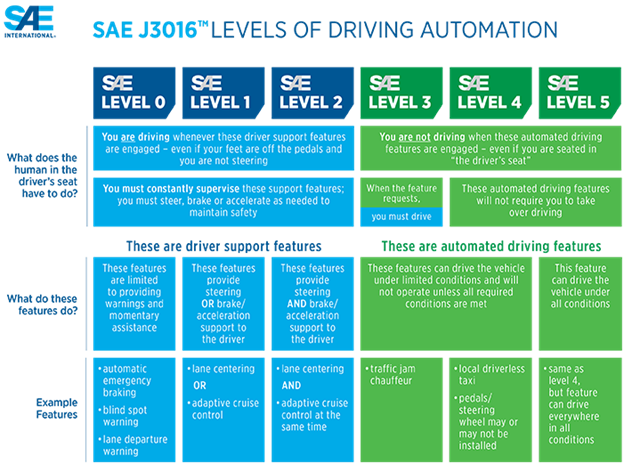
The adoption of ADAS features in vehicles has witnessed significant growth over the past decade. In the current state, most vehicles are equipped with Level 1 (L1) or Level 2 (L2) ADAS capabilities. The introduction of driver monitoring cameras (DMCs) in Level 2 and 3 Advanced Driver-Assistance Systems (ADAS) like Ford BlueCruise and GM SuperCruise is indeed blurring the lines between traditional driver engagement and hands-free driving.


(Source: SAE)

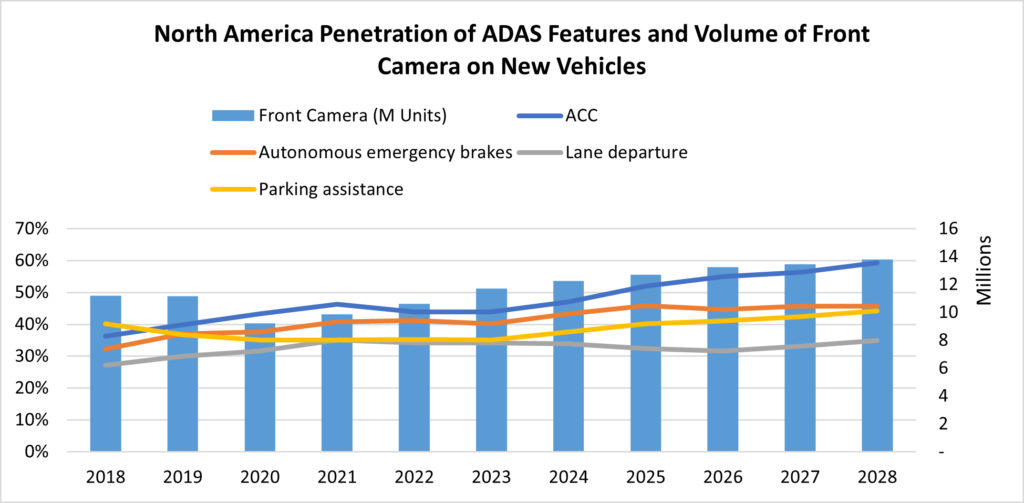
As ADAS features become more mainstream, vehicles will move towards Level 3 (L3) automation and higher, where recalibration is required. This increase in penetration of ADAS will lead to higher demand for recalibration in the coming years.

(Sources: Ducker Carlisle, Global Data)

Recalibration can occur during a collision or even non-collision events as long as there is sensor disruption, and as the number of sensors in newer vehicle models grow, the number of events that may require a recalibration also increases.

Events triggering the need for ADAS recalibration are on the rise, driven by various factors such as minor collisions, windshield replacements, and changes in vehicle components. The need for recalibration increases significantly with each level due to the growing complexity and interdependence of sensors and systems. Even minor repairs or replacements affecting sensor placement or alignment might necessitate recalibration. Front-end collisions, depending on severity, might trigger recalibration of multiple sensors or the entire system in higher levels. Common events requiring recalibration include:

  • Minor collision
  • Collision repair
  • Windshield or side view mirror replacement
  • Suspension repairs
  • Wheel alignment
  • Sensor/mounting bracket replacement
  • Change in tire size
  • Front airbag deployment
  • Radiator and condenser repairs necessitating the removal of front-mounted sensors

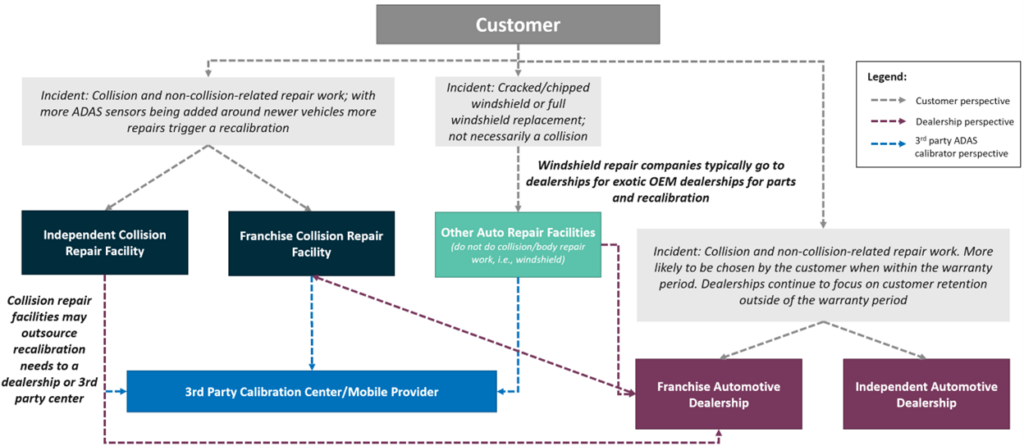
When an incident occurs triggering a recalibration need, customers typically go to the dealership, especially if a vehicle is under warranty. Some customers send their vehicle to collision repair facility as well. However, in most cases, collision repair facilities are outsourcing recalibration needs to a dealership or 3rd party center without informing the customer. Primary factors driving repair shops to outsource ADAS recalibration include:

  • High financial investment : Proper ADAS calibration systems are, on average, a $30k-$45k investment and require dedicated space in a service bay, as opposed to a ~$600-$1,200 cost per event to outsource; Repair shops view ADAS recalibrations as a pass-through cost, not a profit driver. Another potentially ‘hidden’ cost is to have the right equipment and software that can work with the various OEM brands. Some recalibration and diagnostic tool brands may only recalibrate certain vehicle makes and models. The unreadiness of many facilities to install recalibration equipment, including: physical space requirement, flat floors, ability to control lighting dynamically, etc., will also lead to investment in workshop upgrades
  • Uncertainty regarding insurance coverage: Repair shops find insurance companies are more likely to cover ADAS recalibration when done with a dealership as opposed to in-house, especially regarding OEM “recommended” vs. “required” services. Typically repair shops perform both static and dynamic recalibration to protect themselves from liability in the event of an accident
  • Protection against liability: By outsourcing, shops can gain a level of protection as dealerships and specialized ADAS Calibration Centers are believed to have the latest OEM requirements and training

The aftermarket repair landscape offers a range of solutions for ADAS recalibration, including static and dynamic recalibration methods. Each method has its pros and cons, influencing their suitability for different recalibration scenarios. Static calibration requires a diagnostic tool and manufacturer makes’ targets. The vehicle uses the targets with assistance from the scan tool to complete recalibration. This type of calibration requires a controlled environment with a dedicated building footprint (~30×45 feet) and a scanner to communicate with the modules of the vehicle. Dynamic calibration requires a diagnostic tool only and the ability to drive the vehicle a sustained speed without interruption. To complete a dynamic calibration the vehicle must be driven for a predetermined distance and speed in optimal weather conditions. The vehicle uses roadside markers and a scan tool to monitor the progress.

A few considerations and requirements are associated with both methods:

StaticDedicated floorspace: The space needed to recalibrate a vehicle can vary by OEM, vehicle, or calibration type; typically, a space of 30 x 45 sq. ft. is necessaryLevel floor: placement of targets or radar reflectors must be in an indoor shop environment Evenly disbursed lighting: The calibration area should be well lit with evenly distributed light. It is typically recommended to cover windows with direct sunlight to avoid inadvertently impacting the sensor Significant financial investment; systems range from $30-60k
DynamicRequires a service drive to complete; requirements of distance and speed intervals will vary In some cases, may require pre-alignment or static calibration before a dynamic calibration Difficult to complete accurately during inclement weather conditions Additionally poses a liability for shops sending technicians to drive customer vehicles outside of a controlled shop environment

Moreover, aftermarket repair facilities have varying options for ADAS recalibration, from portable devices for windshield recalibration to comprehensive online platforms that provide technician support.

Dealerships and repair facilities work with calibration suppliers in different ways, options including purchase, lease, and Equipment as a Service (EaaS) model. Each business model has its own set of pro’s and con’s that are unique to each end-user profile.

Several suppliers, including asTech, Autel, Bosch, BPG, Hunter, and Snap-On, offer products and business models ranging from simple hand-held scanning devices to full turn-key systems. These systems can ensure accurate wheel alignment, diagnose and recalibrate the full sensor suite, and save specifications for future reference.

Despite advancements in aftermarket repair solutions, several challenges persist in the ADAS recalibration landscape such as technician shortage, equipment compatibility, and certification. The shortage of skilled technicians at repair shops creates a bottleneck, leading to increased repair times for recalibration events. Compatibility issues between OEM systems and aftermarket equipment often force consumers to rely on dealerships for recalibration, limiting their options and potentially increasing costs. Ensuring the precision and effectiveness of recalibration work is crucial for ADAS features to function correctly. Proper certification standards are needed to guarantee the safety and reliability of recalibration procedures.

Addressing the challenges in the ADAS aftermarket recalibration landscape is paramount. The ADAS aftermarket recalibration market is projected to reach $5-6 billion by 2028. Independent and franchise repair or recalibration facilities play a crucial role in serving this growing market segment, necessitating access to certified equipment and trained technicians. In addition, proper recalibration is essential for ensuring the effective functioning of ADAS features, thereby enhancing overall vehicle safety and reducing the risk of accidents.  Despite some state level regulations, current federal regulations lack oversight and/or clear repair requirements for vehicles requiring ADAS recalibration. Nevertheless, Ducker Carlisle anticipates that liability concerns due to the increasing number of vehicles equipped with ADAS will force insurance agencies to implement specific recalibration tracking by repair facility for traceability/liability.

In conclusion, the evolving landscape of ADAS in vehicles necessitates a proactive approach to aftermarket recalibration, addressing challenges, and leveraging opportunities to meet the growing demand for reliable and efficient repair solutions. By investing in technology, training, and certification standards, the automotive industry can ensure the continued advancement and adoption of ADAS features while prioritizing driver safety and satisfaction.


Ducker Carlisle’s decades of automotive consulting experience and comprehensive expertise in auto and light truck manufacturing, electrification, aftersales, and parts benchmarking help automotive clients secure an advantage in a shifting global market. Learn more here.

Article Prepared By:

Leonard Ling, Senior Analyst – Automotive Knowledge Manager

Matthew Trentacosta, Engagement Manager

Deceleration in EV Sales and the Potential Impact on the U.S. Automotive Industry

Deceleration in EV Sales and the Potential Impact on the U.S. Automotive Industry

Deceleration in EV Sales and the Potential Impact on the U.S. Automotive Industry

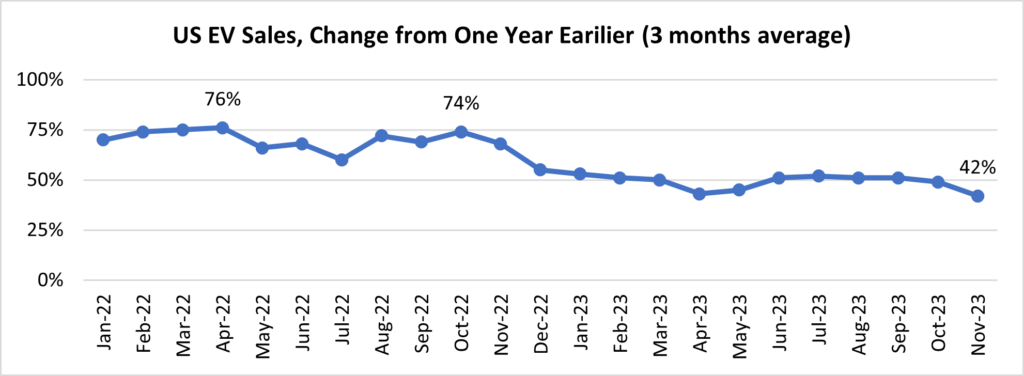
The United States has achieved a significant milestone in its quest for electrification, with over 1.2 million new Electric Vehicles (EVs) sold in the past year, representing more than 7.5% of total U.S. light vehicle sales in 2023, up from 5.9% in 2022 (Kelley Blue Book). However, this growth pales in comparison to the over 50% year-over-year surge experienced by the EV industry before 2023.

In the earlier years, EVs witnessed remarkable sales growth, even with models averaging over $65,000, fueled by high demand, low inventories, and optimistic sales projections by automakers. The appeal of EVs was heightened as gasoline prices approached $5 per gallon. Fast forward to the present, with gasoline prices now around $3 per gallon nationwide, and the average transaction price for an EV, without incentives, dropping to just under $52,000. This shift has seen the market transition from tech-savvy early adopters to more price-sensitive buyers.

(Source: WSJ, Motor Intelligence)

The most appalling change came from California, the leading state for EV penetration. The registration of electric light vehicles in California declined from the second quarter to the fourth quarter of 2023. About 103k EVs were registered in Q2, then went to 101,151 in Q3 and decreased to 89,993 in Q4. (Sources: Experian Automotive, Automotive News)

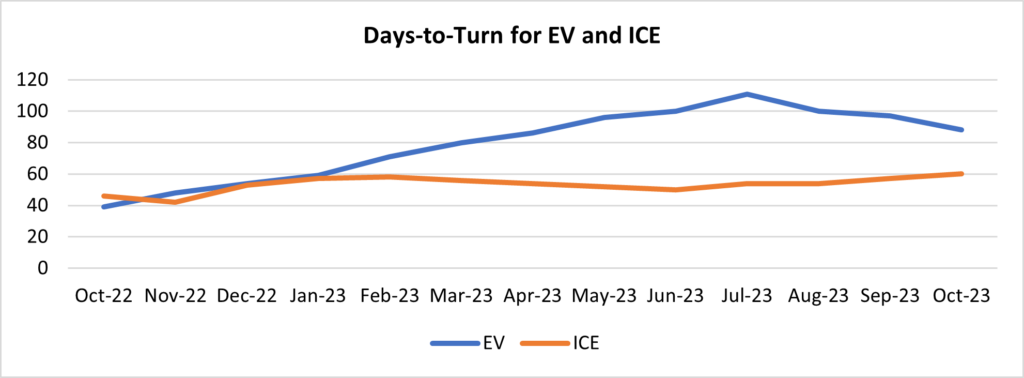
Over the past year, the EV market has faced challenges with price reductions and increasing inventories. In late 2023, it took almost twice as long to sell an EV in the U.S. compared to the previous year. The days-to-turn metric (how long it takes for a vehicle to sell once it is at a dealership) for EVs reached 57 days, compared to 39 days a year before, signaling a lengthening sales cycle. In contrast, ICEs took only 10 more days to turn compared to late 2022.

(Source: Cox Automotive, Edmunds)

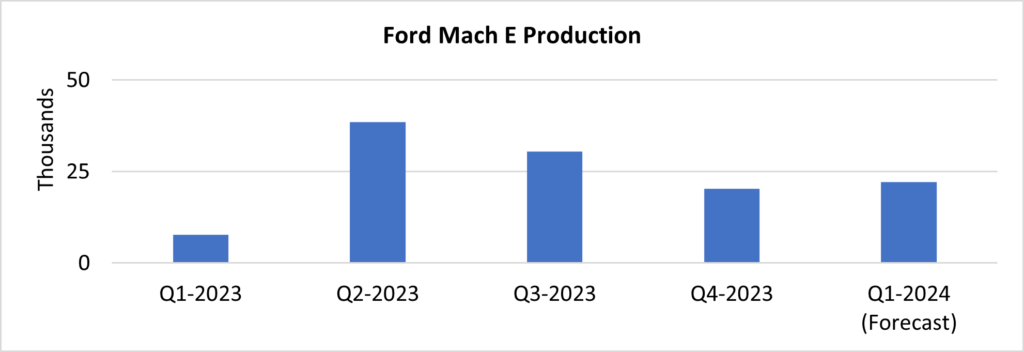
As the growth of EV sales came to a standstill in the latter part of 2023, leading to a buildup of EV inventory, several automakers opted to scale back their ambitious plans for EV rollouts, especially in the short term. Ford recently made announcements about postponing the construction of a new EV battery plant, downsizing another facility, and deferring $12 billion in planned electric vehicle expenditures. Additionally, Ford has scaled down production of the Mustang Mach-E since the fourth quarter of 2023. General Motors followed suit by delaying the launch of Chevrolet Silverado EV and GMC Sierra EV production in suburban Detroit, pushing it to late 2025. Furthermore, GM abandoned a collaboration with Japan’s Honda for the production of affordable EVs and postponed the retooling of an EV plant.

The price war initiated by Tesla indicates that sales are slowing down for all EVs. Furthermore, the price decrease triggers uncertainty with new customers on the sustainability of the market, and It rises anger with existing ones who instantly see the residual value of their vehicle dropping.

(Source: GlobalData Forecast Dec-2023)

The cautious perspective on the future of EVs is influencing decisions regarding investment allocation and the prioritization of product programs. Suppliers are now diverting attention to sustaining sales in their internal combustion components business while awaiting the growth of their EV ventures.

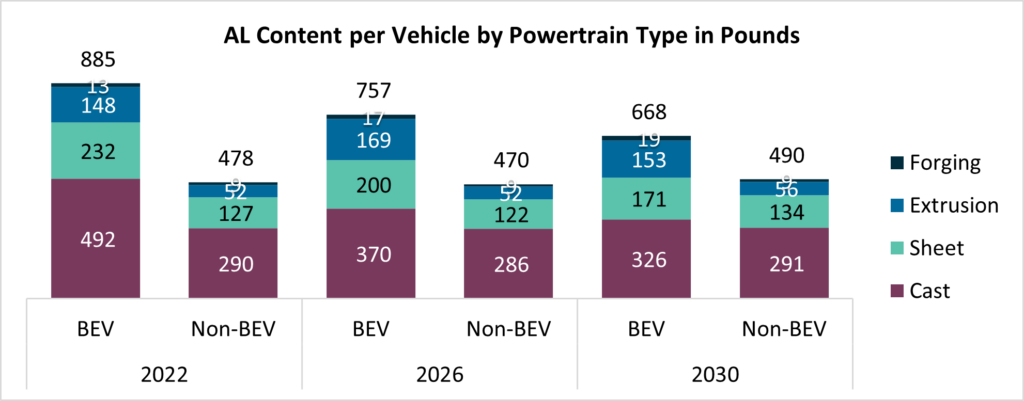
The sluggish adoption of electric vehicles is prompting manufacturers and suppliers to reassess their electrification strategies, given the disparities in material and component choices between EVs and Internal Combustion Engine (ICE) vehicles. An illustrative example is the utilization of aluminum. As highlighted in a 2023 aluminum study by Ducker Carlisle, Battery Electric Vehicles (BEVs) generally incorporate more aluminum content, driven by the increased demand for lightweight components. Suppliers are strategically expanding their capacity for aluminum parts, including battery packs, e-drives, body-in-white, chassis, closures, and other crucial components.

(Source: Ducker Carlisle)

While certain components can seamlessly transition between internal combustion, hybrid, and battery-electric vehicles, others may not be applicable to both EV and internal combustion platforms or may necessitate significantly different designs, leading to substantial investments by suppliers. This slowdown may also lead to increased resource and platform sharing among manufacturers, adaptation of existing assembly lines for EVs, standardization of parts, a focus on production costs, and redesigning cost-sharing mechanisms for future EV models. These measures are expected to result in fewer launches and a reduction in tooling expenditure.

Interestingly, not everyone views the slowdown in EV sales negatively. Auto companies’ EV transition strategies are also influenced by geopolitical factors and the federal government’s initiative to re-shore auto production in the U.S. for EVs. Finished EVs, batteries, e-drives, and other critical components manufactured or assembled by foreign entities of concern, such as China or Russia, will no longer qualify for the EV tax credit. This restriction has compelled OEMs and suppliers to redesign their footprint and supply chain, a process that could take years to complete. Some critical raw materials essential for e-drives and EV batteries, such as automotive-grade electrical steel and rare earth minerals, remain challenging to source domestically or from U.S. allied countries.

Amidst these changes, the EV industry sees a silver lining in the temporary slowdown, providing an opportunity to build a secure supply chain that exclude China sourced materials or components. The pause allows for breathing room in investment, permitting, and construction of a robust battery and e-drive supply chain, fostering domestic manufacturing and securing raw materials from reliable sources.

The deceleration in EV sales has prompted adjustments in plans and strategies across the automotive industry, leading to a reevaluation of priorities, reassessing the tipping point for new components, and a shift towards building a more sustainable and secure future for electric vehicles in the United States.

Ducker Carlisle’s decades of automotive consulting experience and comprehensive expertise in auto and light truck manufacturing, electrification, aftersales, and parts benchmarking help automotive clients secure an advantage in a shifting global market. Learn more here.

Article Prepared By:

Bertrand Rakoto, Director – Global Automotive Practice Leader

Leonard Ling, Senior Analyst – Automotive Knowledge Manager

I-CAR and SCRS Partner with Ducker Carlisle to Release White Paper on Collision Repair Technician Satisfaction

I-CAR and SCRS Partner with Ducker Carlisle to Release White Paper on Collision Repair Technician Satisfaction

In collaboration with the Society of Collision Repair Specialists (SCRS) and Ducker Carlisle, I-CAR unveiled a white paper delving into technicians’ viewpoints on compensation, workplace culture, and career prospects. This extensive report offers insights into the distinct perspectives of collision repair technicians, seeking to enhance comprehension of their motivating factors and professional aspirations, while pinpointing pivotal factors shaping their satisfaction in the workplace.

Download White Paper Here

Navigating the Evolution: Mega-Casting’s Impact on Automotive Manufacturing

Navigating the Evolution: Mega-Casting’s Impact on Automotive Manufacturing

Streamlined Assembly and a Giant Leap in Casting Technology

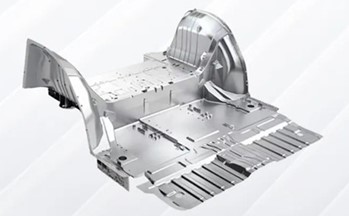
Tesla has boldly embraced a groundbreaking approach to vehicle design and assembly with its Giga castings. This technology is based on large cast aluminum components produced on presses with clamping forces greater than 6,000 tons. Such components aim at simplifying assembly processes, provide beneficial productivity gains with shorter production time, and a reduction in parts diversity as described in Ducker Carlisle’s white paper from 2022.

This leads to potential changes in future automotive architectures. New EV platforms open the way to increase its utilization of mega-castings due to the lack of design constraints from the absence of a tunnel dedicated to an exhaust system or driveshaft.

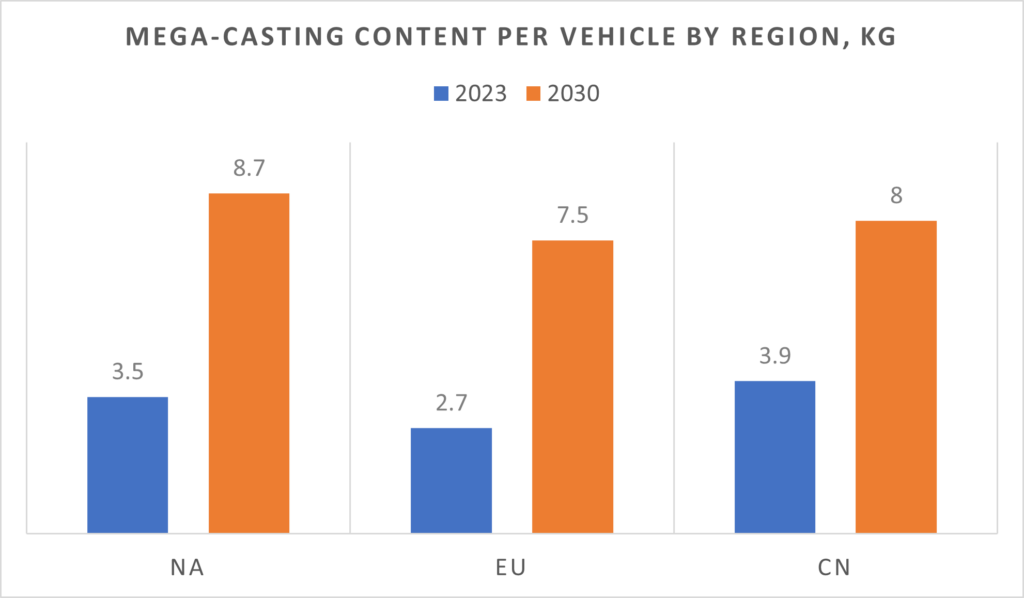
Ducker Carlisle has tracked the adoption of mega-castings since its inception. China leads the globe with 0.7M vehicles in 2023 (2.8% of total production) with a mega-casting and is forecasted to grow to over 2M by 2030 (6.4% of total production). NA follows with 0.4M in 2023 (2.4% of total production) while EU lags with just 0.26M (1.8% of total production).

Data Source: Ducker Carlisle
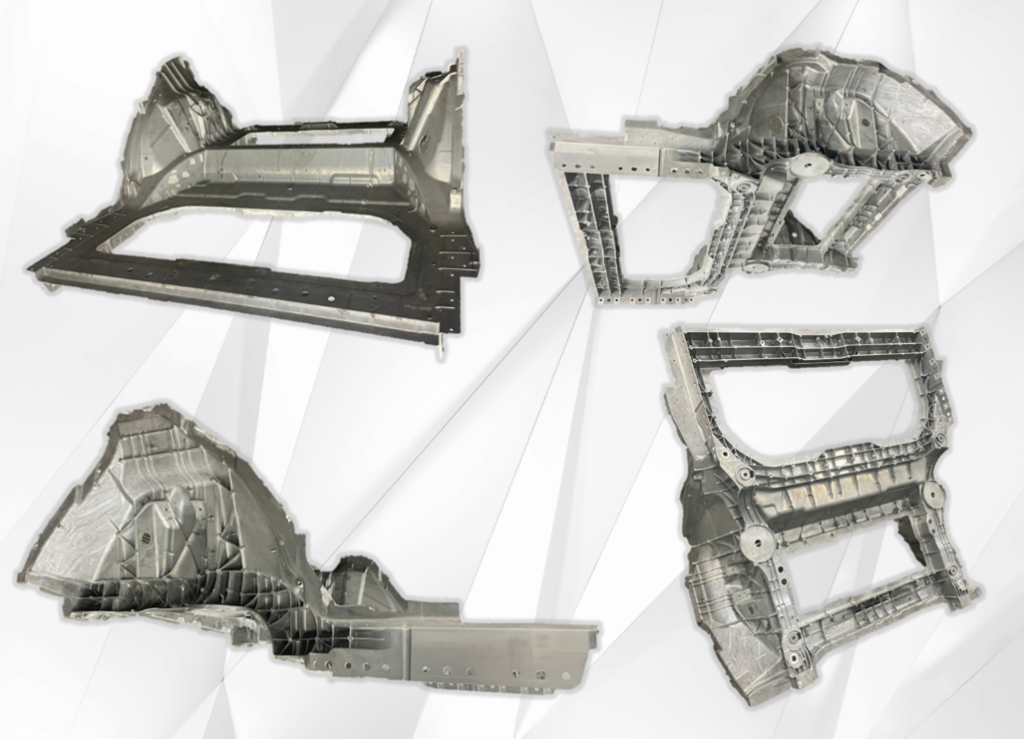
(Rear mega-casting from WenCan for Xpeng, Photo credit: Ducker Carlisle)

As the production cost of BEVs remain higher than ICE vehicles (mostly due to the battery costs), OEMs must find additional solutions to lower costs and vehicle MSRP, leading to a growing interest for mega-castings. Several Chinese OEMs including HiPhi, NIO, Seres, Xpeng, and Zeekr, have successfully followed Tesla’s steps with mega-casting applications, most of the time outsourced to suppliers such as HongTu, Linamar, TuoPu, and WenCan (Le Bélier). Some OEMs like Li, XiaoMi, HongQi, and ChangAn explore the process and the possibility to develop in-house mega-casting productions. Due to the level of investment, newcomers and new factories are preferred for mega-casting implementation as they tend to bring fewer challenges related to the amortization of existing production lines, lowering the entry point for innovative manufacturing processes.

(Rear mega-casting on Zeekr 009 and Volvo EM90; Photo credit: Zeekr)

The motivation for the larger adoption of mega-casting in China is the lower cost of large presses (over 6,000 tons), driven by intense competition among local press suppliers such as Yizumi and Haitian. Additionally, Chinese automakers are compelled to showcase innovation by competing with industry giants like Tesla. The adoption of mega-castings serves as a powerful marketing strategy. This combination of factors contributes to the rapid adoption of mega-casting in China while legacy carmakers in the US and the EU still weigh the advantages of moving forward with mega-castings or asking suppliers to make the necessary investments to produce these components.

Investment barriers and technology improvements

There are high investment thresholds for mega-castings. Current technologies require 6,000-ton (and often times larger) presses compared to 4,400-ton machines for the largest legacy (high pressure vacuum die) cast parts. The tooling required for these large presses also add to the barriers of entry including highly specialized mold designs (flow patterns, size, and robustness of the die) and the annual cost to maintain and replace these molds after 100K shots. Although the industry has recorded monumental improvements, the scrap rate remains high (2-digit percentage of rejection rate for components is unseen in the automotive industry). The difficulty to achieve perfect components at first with the potential presence of porosity is enhanced by the lack of heat treatment because of the component size. Heat-treatment helps prevent cracks and secure the integrity of the parts. Currently, OEMs are applying different solutions including ultrasonic inspections or X-rays to identify hidden defects. Improvements include the development of new alloys that don’t require heat-treatment and mitigate the occurrence of porosity-related issues.

There are other solutions being investigated to improve productivity, costs, and quality, including going with larger presses, some exceeding 12,000 tons, and up to 20,000 tons for the largest press announced to date. OEMs and suppliers are exploring additional innovations including new alloys and exploring Rheocasting (semi-molten alloy injection to improve penetration of material in the die) as a viable alternative.

Aging and the lack of return on experience

There is a paradoxical attitude in the automotive industry which opposes the continuous need for innovation and the robustness of solutions based on experience. As a matter of fact, the current lack of return on experience adds to the cost of investment for legacy OEMs’ hesitations. Tesla and Chinese OEMs race for innovation and remain focused mostly on production cost. Legacy OEMs tend to consider more complex business models and approaches including vehicle maintenance, parts, services, and liability as essentials.

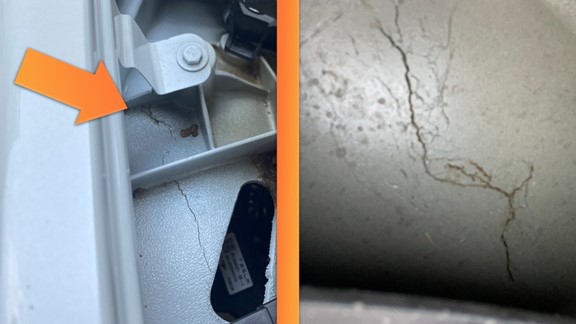
The recent introduction of mega-casting prevents from answering questions on durability and the impact of aging. One occurrence of cracks in the mega-casting of a Tesla Model Y has been reported by one owner. No other incident has been reported, and it will take years to define whether this will remain an isolated incident or if it’s the tip of the iceberg. The latter would generate concerns in terms of respect for the vehicle safety and design, particularly related to crashworthiness and energy absorption in case of a major crash. It tends to illustrate and justify the hesitation of carmakers such as Mercedes-Benz who has changed its strategy twice towards mega-castings and particularly where best within the BIW to utilize them.

(Crack on Model Y mega-casting; Photo credit: Twitter | Nizar Kamel)

In the meantime, repairability of mega-castings remains a hot topic. On one hand, we can consider it is a secondary focus as an impact dissipating enough energy to break a mega-casting would likely result in significant damage to any vehicle beyond repair (total loss). But the lack of return on experience doesn’t yet provide enough data to cope with such an assumption. On the other hand, replacement of a mega-casting component nearly impossible, while repairability would require redesigning these components and creating new subcomponents (castings and extrusions) with specific repair zones

Opening Pandora’s box

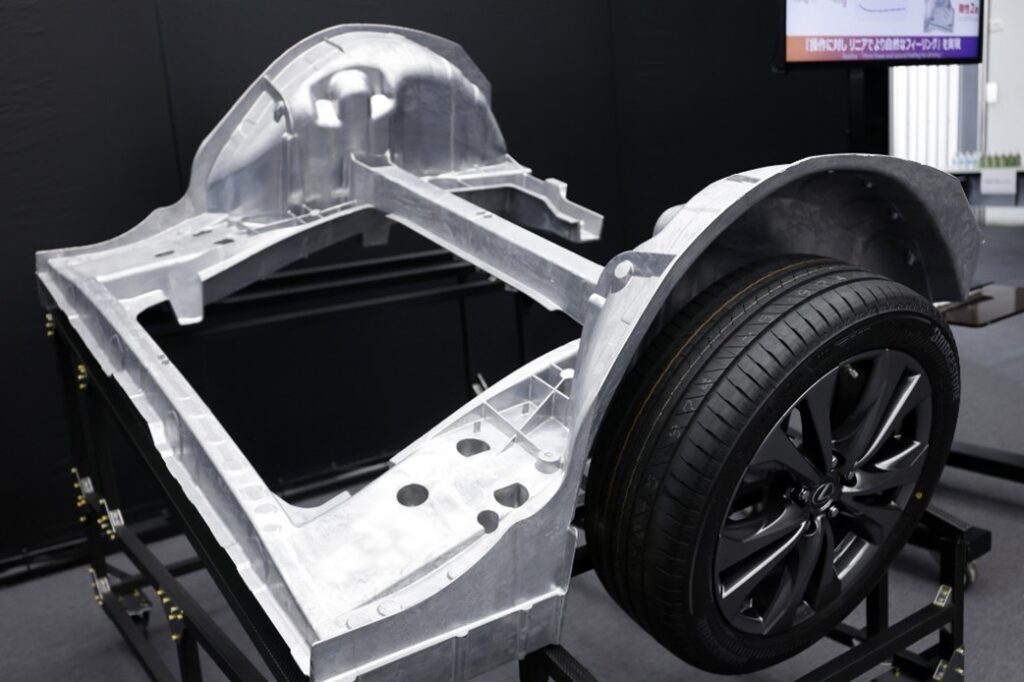
Tesla opened Pandora’s box with its Gigacasting solution. Mega-castings caught the automotive industry’s attention with several carmakers making announcements about their interest in such an architecture. However, few manufacturers have yet publicly committed to the adoption of such technology and the platform architecture necessary to achieve the integration of meg-castings. Manufacturers and equipment suppliers are leveraging return on experience and innovations in aluminum castings to further integrate multiple components into single parts to improve production process without the need for oversized presses. Large castings appear as one possible outcome. These integrate shock towers, longitudinals, and cross members into one component, without the difficulty to add walls, the most difficult area to achieve in mega-castings. Ultimately, large castings can be produced with 4,400-ton presses.

(Toyota’s Large-casting rear component. Photo credit: Kiyoshi Ota/Bloomberg)

The mega-casting disruption has impacted most carmakers now considering innovation beyond large and mega aluminum casting, including potential for easier assembly of steel, plastics, and composite large modules. Not everyone may adopt mega-castings, but Tesla has shaken the automotive industry and opened the way to innovation in vehicle platforms and manufacturing.

Ducker Carlisle’s decades of automotive consulting experience and comprehensive expertise in auto and light truck manufacturing, electrification, aftersales, and parts benchmarking help automotive clients secure an advantage in a shifting global market. Learn more here.

Article Prepared By:

Bertrand Rakoto, Director – Global Automotive Practice Leader

Leonard Ling, Senior Analyst – Automotive Knowledge Manager

Global Trends in Battery Cell Chemistry 2024

Global Trends in Battery Cell Chemistry

Behind the spectacular penetration of batteries in vehicle applications, the question of cell chemistry remains a key driver to ensure that all needs are met. The way passenger vehicles, commercial vehicles and off-highway equipment use this energy is unique, so a single active material combination cannot suit them all. We tend to hear a lot about Nickel Manganese Cobalt (NMC) and Lithium Iron Phosphate (LFP) as the most popular chemistries, but it remains unclear what will be the dominant choice in the future.

Cell chemistry choices for passenger vehicles

In passenger vehicles, a crucial factor is energy density. The higher the density, the more range will be available in a reasonable weight. Drivers expect less expensive EVs that offer the same versatility as combustion engines (range, fast charging). The NMC chemistry is the best one to this regard, making it the most popular among major OEMs. Out of the top 5 EV selling groups in 2022, four were using NMC cells in their vehicles such as the Volkswagen ID.4 and ID.3, the Peugeot e-208 or the Fiat 500e. However, the NMC chemistry is expensive because of the nickel and cobalt it contains. Combined with exponential demand for batteries, that puts pressure on production costs, ultimately impacting final consumers.

That explains why the LFP chemistry, which does not contain expensive metals, is gaining momentum. Not only is it cheaper, but it is also safer regarding thermal risks and has a longer life cycle. Nonetheless, LFP offers a lower energy density, and it is less profitable to recycle. Among other reasons, it is mainly because there is no cobalt and nickel to be refined and sold. In addition, the NMC recycling process shows a higher degree of optimization and is thus more profitable, according to FEV.

Nonetheless, it has been the chemistry of choice for Tesla since 2021 on its shorter-range models, mostly for cost and nickel /cobalt scarcity reasons.

Find out more about battery recycling trends: Battery Recycling Plays Major Role in Electrification of Vehicles

Commercial and off-highway: a slower electrification path

In commercial vehicles and off-highway industries, user needs are more diverse, so market players are still considering several chemistry options depending on the end usage.

Long-haul trucks will need a safe battery with high longevity (aiming for as many charging cycles as possible) because they travel much more distance per year and over their lifespan. Daimler Trucks estimates the average  truck drives 60 000+ miles a year versus 10 000+ miles a year for a passenger car. Charging time is also less of an issue due to laws that regulate the work time of drivers. Planning range is therefore easier, making it a less vital aspect than for passenger cars. On top of that, wireless charging solutions are currently tested, a relevant option that would enable charging while loading, for instance. In such a context, LFP batteries are favored for their superior longevity. Electric trucks are expected to account for only 8% of the global market by 2026 but could reach nearly 22% by 2030, according to ACT Research´s forecast.

Off-highway vehicles often have different requirements, like mining trucks that need to perform heavy duty work during a shorter time range. End users are businesses who are tied to profitability, meaning equipment price, range or performance are crucial. OEMs must work to convince those companies that targeted solutions can address their concerns. New chemistries are developed for those applications specifically, like the lithium – titanium – oxide (LTO) from Toshiba. LTO allows for over 20 000 cycles on average, compared to 3 000 to 5 000 for LFP, making it the longest lasting battery chemistry. It also allows for very fast charging (80% in 3 minutes), a suitable option for energy-intensive tasks.

For many heavy duty applications fast charging, lifetime and safety are key factors to select the best battery technology. The possibility to reduce the battery size and to avoid replacements over lifetime are more important factors than range and energy density. LTO is the most powerful, robust and safest Lithium Ion technology and offers many benefits for applications where the energy is actually used rather than only stored” said Toshiba’s Vice President of Battery Division, Volker Schumann.

Regional differences in automotive applications

The penetration of LFP and NMC is growing at a different pace dependent on the region and on the OEM. In Europe, LFP only has a 4% market penetration for 2023 as the main OEMs remain loyal to NMC. Renault, for example, does not plan to invest in LFP as it secured the supply of French-built NMC cells from Envision and Verkor starting in 2024-2025. Some OEMs like Volkswagen or Stellantis have started to consider the LFP technology to enter the sub-€25 000 EV market. For now, only one company, Eleven ES, started to produce LFP cells in Europe at its Serbian plant that opened in April 2023.

In North America, NMC is also the most common chemistry, but LFP is growing fast. According to Rho Motion, it went from a 6% market share in 2022 to 15% in 2023, driven by Tesla´s growth. While China controls the entire LFP supply chain, the US has started to invest in it too. ICL, a biochemical firm, is planning to open a $400 million LFP manufacturing plant in 2025, the first of its kind in the US.

In China, LFP has become the number one chemistry with a 59% market share in 2023 due to domestic giants, like BYD and its Blade battery, using it widely. CATL, the world´s number one battery manufacturer, unveiled its Superfast Charging LFP battery in August 2023, aiming at 400km of range with a 10-minute charge. Despite the growing interest towards LFP, the International Energy Agency expects that NMC will remain dominant: LFP is estimated to account for 30% of the market globally by 2030.

Conclusion

The battery market is driven mostly by automotive applications, where electric vehicle growth is exponential. For now, two battery chemistries are in competition, NMC being the preferred option among automakers. But the price sensitivity of customers and the pressure on expensive metal supply make cheaper LFP batteries a very interesting alternative, hence their growing market share. In the future, the solid-state battery could be the game changer the industry is hoping for thanks to its higher energy density, improved safety, and quicker charging time. However, it remains a long-term perspective from a research and development standpoint.

The electrification of trucks and off-highway vehicles will be slower as it is more complex to address the very challenging needs of end users. The industry is only at the very beginning of its journey and customer trust has yet to be gained.

Article Prepared By:

Théo Castel, Analyst Automotive

Isabelle Kraft, Senior Analyst Automotive

Audrey Courant, Managing Principal